Skip to content

Search

Game-changing program for kids with social and communication differences

A world-first program for babies with differences in their social and communication skills is aiming to help parents and caregivers better understand the different ways their child communicates.

Aiming high for paediatric brain tumour diagnostic testing

Australian children diagnosed with a brain tumour now have a better chance of accessing the best treatment for their disease thanks to a trans-Tasman collaboration spearheaded by The Kids Research Institute Australia cancer researcher Professor Nick Gottardo.

Immune impacts of infant whole-cell and acellular pertussis vaccination on co-administered vaccines

We compared the effect of a heterologous wP/aP/aP primary series (hereafter mixed wP/aP) versus a homologous aP/aP/aP primary schedule (hereafter aP-only) on antibody responses to co-administered vaccine antigens in infants and toddlers.

Factors influencing participation in home, school, and community settings by 6- to 9-year-old children born preterm: a qualitative descriptive study

There is no published information on preterm children's activities and participation during middle childhood, a time when growth and development are characterised by increasing motor, reasoning, self-regulation, social and executive functioning skills. This study explored the health, activities and participation of children born very preterm during middle childhood (6-9 years) from the perspectives of their parents.

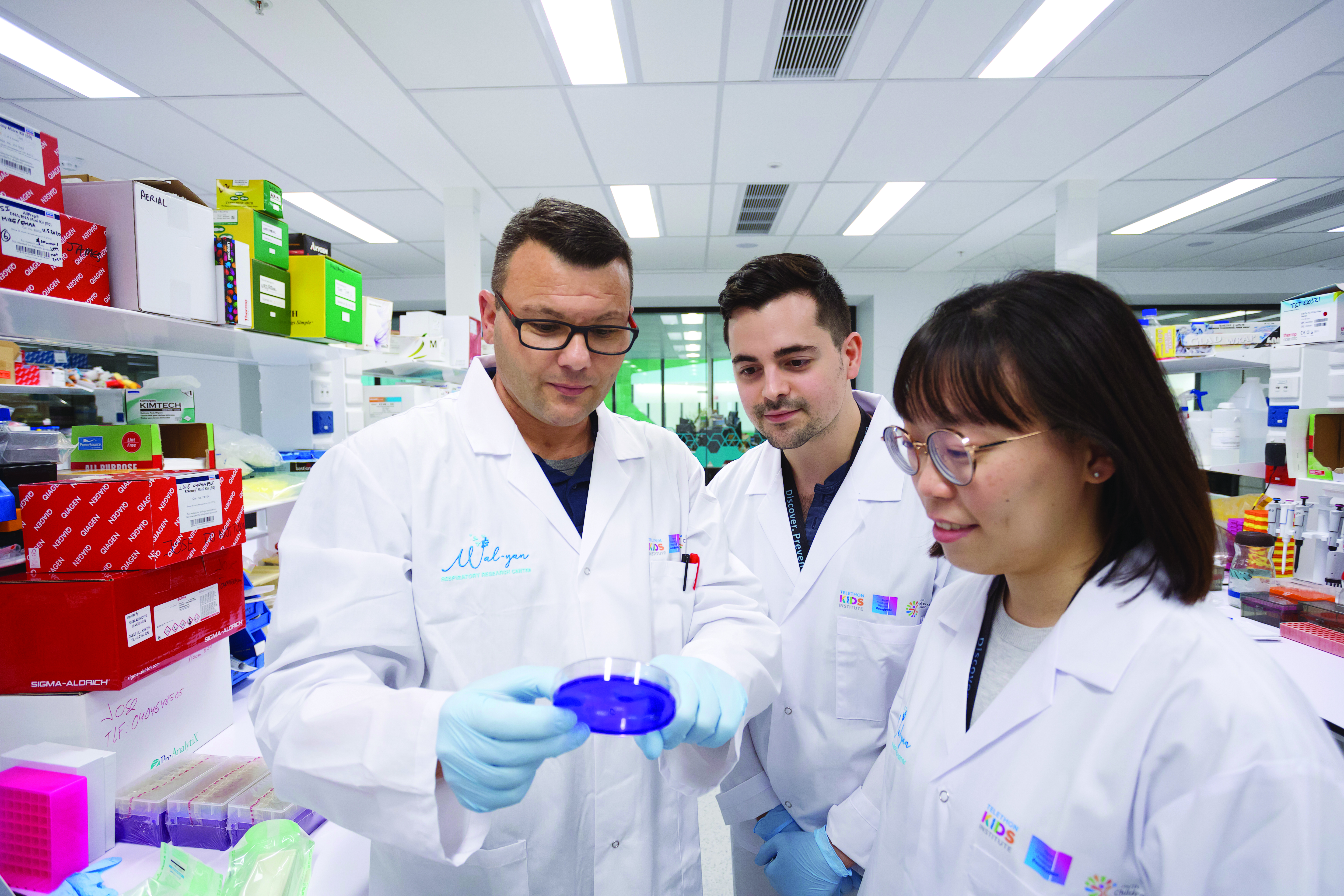
Lytic activity, stability, biofilm disruption capabilities and genomic characterisation of two bacteriophages active against respiratory MRSA

This study aimed to characterise bacteriophages for potential therapeutic use against Staphylococcus aureus, focusing on clinical respiratory isolates of methicillin-sensitive (MSSA) and methicillin-resistant (MRSA) strains. Specifically, it sought to evaluate phage lytic activity, host range, stability, biofilm disruption capabilities, and overall safety for therapeutic use.

Care provided to women during and after a pregnancy complicated by hyperglycaemia: the impacts of a multi-component health systems intervention

Aboriginal and Torres Strait Islander women experience a disproportionate burden of hyperglycaemia in pregnancy. A multi-component health systems intervention aiming to improve antenatal and postpartum care was implemented across Australia’s Northern Territory (NT) and Far North Queensland (FNQ) between 2016 and 2019. Components included clinician education, improving recall systems, enhancing policies and guidelines, and embedding Diabetes in Pregnancy (DIP) Clinical Registers in systems of care. This program was evaluated to determine impacts on clinical practice and maternal health.

Clostridioides (Clostridium) difficile infection in hospitalized adult patients in Cambodia

Despite high levels of global concern, little is known about the epidemiology of Clostridioides (Clostridium) difficile infection (CDI) in Cambodia. This study aimed to identify the prevalence and risk factors for CDI, and molecular types of C. difficile in hospitalized adults at Calmette Hospital, Phnom Penh, Cambodia. 

Psychological and self care outcomes for children and adolescents living with type 1 diabetes and their caregivers attending diabetes camp: A mixed methods study

Diabetes camps for children and adolescents living with Type 1 Diabetes (T1D) offer an important opportunity to foster self-efficacy and 'common humanity', a sense that they are not alone in their challenges. The current study primarily aimed to assess whether psychological wellbeing, diabetes self care behaviours and HbA1c improved amongst campers and their caregivers, and whether these would be sustained at 3- and 6-months.

Autism Early Intervention Providers: Their Priorities, Use of Empirically Supported Practices, and Professional Development Needs

Autism early intervention research has indicated a research-to-practice gap, including continued use of practices with inadequate research support, and insufficient use of empirically supported practices. The present study explored the processes and mechanisms through which providers working with young children on the autism spectrum learn, select, and implement the various practices in their clinical repertoires. 

‘I'm glad my baby has weaned so I don't need to make that decision.’ Understanding breastfeeding-related COVID-19 vaccine narratives on social media

During the coronavirus disease 2019 (COVID-19) pandemic, the infodemic has been highly visible. Vaccine-related advice and evidence-based guidelines for breastfeeding women have lagged, and, at times have been contradictory and confusing. Breastfeeding is an important public health issue with long-lasting health benefits for infants and mothers.