
Search
Citation: ten Brink DC, Bowring AL, Martin-Hughes R, ……. Shattock A, Palmer T, Maxim C, Zhang S, Scott N. Optimising HIV spending in 12 eastern
Respiratory viruses are increasingly detected in children with community-acquired pneumonia but prevalence estimates vary substantially. We aimed to systematically review and pool estimates for 22 viruses commonly associated with community-acquired pneumonia.
Peter Britta Richmond Regli-von Ungern-Sternberg AM FAHMS MBBS MRCP(UK) FRACP MD, PhD, DEAA, FANZA Head, Vaccine Trials Group Chair of Paediatric
Because of its beneficial off-target effects against non-mycobacterial infectious diseases, bacillus Calmette-Guérin vaccination might be an accessible early intervention to boost protection against novel pathogens. Multiple epidemiological studies and randomised controlled trials are investigating the protective effect of BCG against coronavirus disease 2019 (COVID-19).
Leclercia adecarboxylata is a rare cause of septic arthritis in children, and has intrinsic resistance to common antibiotics. We describe two cases of L. adecarboxylata septic arthritis in children that required re-presentation to hospital with prolonged treatment, and highlight the importance of considering L. adecarboxylata as a potential cause of infection among children with penetrating injuries and associated environmental exposure.
Early life is marked by distinct and rapidly evolving immunity and increased susceptibility to infection. The vulnerability of the newborn reflects development of a complex immune system in the face of rapidly changing demands during the transition to extra-uterine life.
The emergence of multi-drug resistant (MDR) bacteria is recognised today as one of the greatest challenges to public health. As traditional antimicrobials are becoming ineffective and research into new antibiotics is diminishing, a number of alternative treatments for MDR bacteria have been receiving greater attention. Bacteriophage therapies are being revisited and present a promising opportunity to reduce the burden of bacterial infection in this post-antibiotic era.
Cancer vaccination drives the generation of anti-tumor T cell immunity and can be enhanced by the inclusion of effective immune adjuvants such as type I interferons (IFNs). Whilst type I IFNs have been shown to promote cross-priming of T cells, the role of individual subtypes remains unclear. Here we systematically compared the capacity of distinct type I IFN subtypes to enhance T cell responses to a whole-cell vaccination strategy in a pre-clinical murine model.
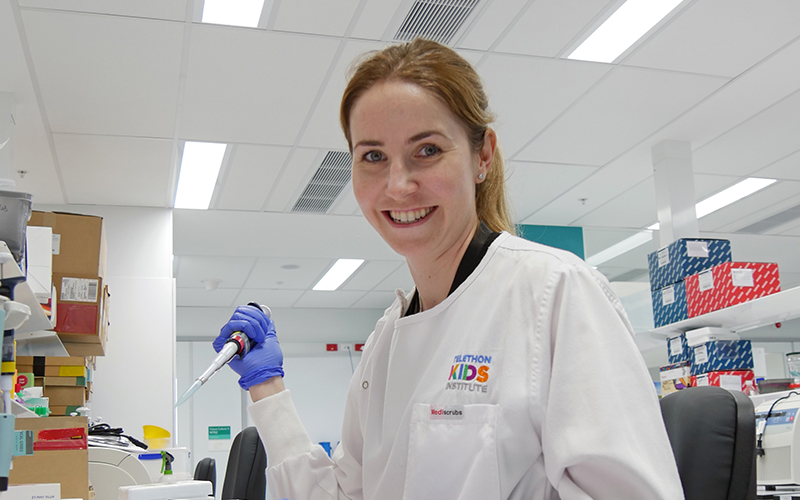
A The Kids Research Institute Australia researcher will work to better understand the immune system mechanisms that cause multiple sclerosis, thanks to a new grant from MS Australia.

Three outstanding young researchers from The Kids Research Institute Australia have been named Raine Fellows and received valuable Raine Priming Grants to support their child health research.