
Search

Every decision a child with type 1 diabetes makes can impact on their blood glucose levels.
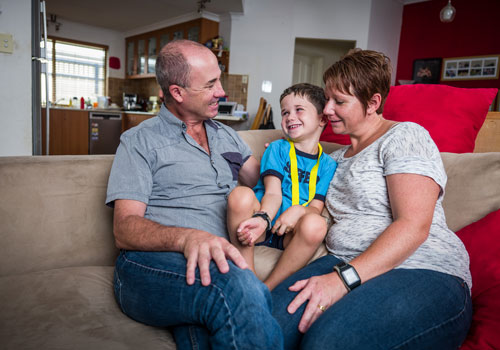
When Jodie and Brad Scott welcomed their fourth child Heath into the world, they were prepared for the many sleepless nights that come with caring for newborns.
Diabetes research got a huge boost when the WA Children’s Diabetes Research and Education Centre for Research Excellence opened late last year.
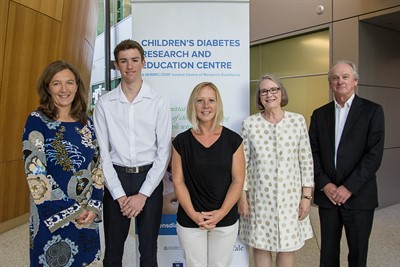
Launch of the WA Children's Diabetes Research and Education Centre for Research Excellence (CRE) on the eve of World Diabetes Day.
New research from Perth's Telethon Institute for Child Health Research has revealed an unexpected pattern in the rate and incidence of type 1 diabetes
Identifying individuals at high risk of type 1 diabetes (T1D) is crucial as disease-delaying medications are available. Here we report a microRNA (miRNA)-based dynamic (responsive to the environment) risk score developed using multicenter, multiethnic and multicountry ('multicontext') cohorts for T1D risk stratification. Discovery (wet and dry lab) analysis identified 50 miRNAs associated with functional β cell loss, which is a hallmark of T1D.
Children and young people with type 1 diabetes (T1D) experience high rates of mental ill health and stress due to the emotional and cognitive energy required to manage their condition. Our team has codesigned Wellbeing T1D, a brief trauma-informed online intervention for adolescents living with T1D. This 5-week intervention will teach skills to promote problem solving, improve emotional regulation and promote helpful thinking and coping.
To explore the lived experiences of parents of children at risk of type 1 diabetes undergoing repeated blinded continuous glucose monitoring. Since 2021, children with persistent islet autoimmunity in the Environmental Determinants of Islet Autoimmunity study have been invited to participate in a sub-study involving blinded Dexcom G6 CGM.
School time represents a significant component of overall glycaemia for children with type 1 diabetes (T1D), and glucose levels during instructional time may be important for optimising academic progress. There is, however, limited literature regarding glycaemia during school hours. This study aimed to evaluate glucose levels during school in primary school-aged children with T1D in Western Australia (WA) and to compare these with non-school days.
Islet autoantibodies herald early type 1 diabetes. However, less is known of the evolution of autoantibodies to the islet autoantigen ZnT8. Our primary aim was to characterise the development of islet autoantibodies in a pregnancy-birth at-risk cohort and to provide new knowledge about ZnT8A.