
Search
The transition to formal schooling is a critical milestone in a child’s development. For Aboriginal children, early experiences are shaped by both cultural strengths and enduring impacts of colonisation. This study explored factors influencing Aboriginal families’ transition-to-school experiences in an urban Western Australian community.
This resource kit for Aboriginal health workers is an exciting milestone in the Rio Tinto Aboriginal Health partnership with The Kids Research Institute Australia
As part of the discussions with Kimberley Aboriginal Medical Service (KAMS) to establish the Broome site of the WAAHKN it has been agreed to establish...
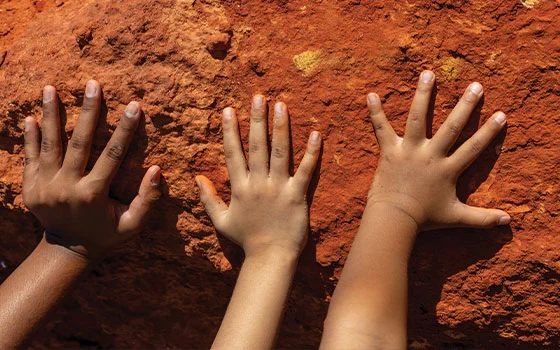
Facilitate research interest & opportunities that involve Aboriginal families & communities and build the capacity and development of Institute researchers.
The colonisation of Australia around 250 years ago left a significant enduring impact on the mental health of Aboriginal and Torres Strait Islander peoples. Vitamin D may play a role in modulating mental health as its receptors are present in the brain regions associated with mood and behaviour regulation.
Maternal mental health problems are common during the perinatal period and have been associated with several negative outcomes in children. However, few studies have examined the associations between maternal mental health problems and offspring outcomes among Indigenous people, and the findings across these studies have been inconsistent. This scoping review examined the birth and childhood (≤12 years) health and development outcomes of the children of Indigenous women with mental health problems.
Maternal mental disorders have been associated with adverse perinatal outcomes such as low birthweight and preterm birth, although these links have been examined rarely among Australian Aboriginal populations. We aimed to evaluate the association between maternal mental disorders and adverse perinatal outcomes among Aboriginal births.
Fiona Pete Stanley Azzopardi FAA FASSA MSc MD FFPHM FAFPHM FRACP FRANZCOG HonDSc HonDUniv HonFRACGP HonMD HonFRCPCH HonLLB (honoris causa) PhD, FRACP
Aboriginal and Torres Strait Islander (hereafter Aboriginal) women have a high prevalence of diabetes in pregnancy (DIP), which includes pre-gestational diabetes mellitus (PGDM) and gestational diabetes mellitus (GDM). We aimed to characterize the impact of DIP in babies born to Aboriginal mothers.
The objective of this review is to investigate First Nations populations' perceptions, knowledge, attitudes, beliefs, and myths about stillbirth.