
Search

The Early Years Systems Evidence (EYSE) team specialises in working in partnership with governments and service providers, with a distinct focus on improving the life chances of children in Australia.
Every child deserves the best possible start in life. Evidence demonstrates the period from pre-birth to three years is a vital period of development. It lays the foundations for a child’s future and has life-long impacts on health, education, job opportunities, social inclusion and wellbeing.
The number of words children produce (expressive vocabulary) and understand (receptive vocabulary) changes rapidly during early development, partially due to genetic factors. Here, we performed a meta-genome-wide association study of vocabulary acquisition and investigated polygenic overlap with literacy, cognition, developmental phenotypes, and neurodevelopmental conditions, including attention-deficit/hyperactivity disorder.
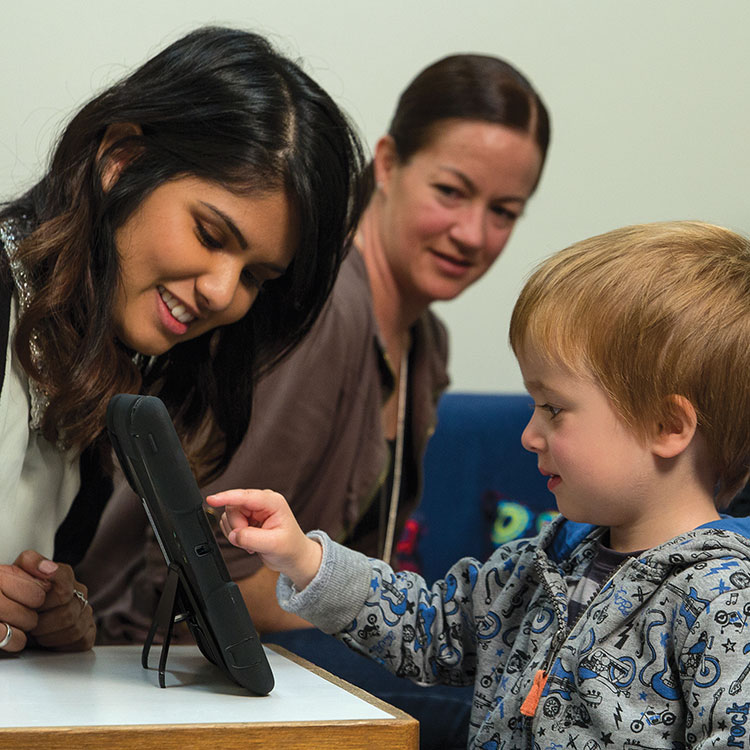
A The Kids Research Institute Australia study has shown that in addition to intervention with trained therapists, children with autism may benefit from app-based therapies.
Aotearoa New Zealand does not provide publicly-funded intensive autism support. While parent-mediated supports are promising, children and families may also benefit from direct clinician support. We tested the efficacy of a low-intensity programme involving parent- and clinician-delivered support for autistic children.
Neutrophil elastase is a significant risk factor for structural lung disease in cystic fibrosis, and Pseudomonas aeruginosa airway infection is linked with neutrophilic inflammation and substantial respiratory morbidity. We aimed to evaluate how neutrophil elastase (NE) activity changes after P. aeruginosa eradication and influences early disease outcomes. We assessed participants in the AREST CF cohort between 2000 and 2018 who had P. aeruginosa cultured from their routine annual bronchoalveolar lavage (BAL) fluid and who underwent eradication treatment and a post eradication BAL. Factors associated with persistent P. aeruginosa infection, persistent neutrophilic inflammation following eradication and worse structural lung disease one year post-eradication were evaluated.
Nurturing children's health together: A collaboration between early childhood education and care (ECEC) educators and parents on active play and eating well
Grip strength is a proxy measure for muscular strength and a predictor for bone fracture risk among other diseases. Previous genome-wide association studies have been conducted in large cohorts of adults focusing on scores collected for the dominant hand, therefore increasing the likelihood of confounding effects by environmental factors.
Children who have an older sibling diagnosed with autism have an increased likelihood of being diagnosed with autism or developing broader developmental difficulties. This study explored perinatal experiences of parents of a child diagnosed with autism, spanning pre-conception until the subsequent child’s early developmental period.
Probiotics may be neuroprotective for preterm neonates due to their anti-inflammatory effects and ability to facilitate nutrition. AIM: To assess long-term effects of early probiotic supplementation on neuropsychological development in preterm infants