Search
News & Events
Video intervention offers promising language boost for kids showing early signs of autismThe first rigorous trial of a pre-emptive behavioural intervention for babies showing early signs of autism has found the therapy can improve early language development.
Research
Australian Clinicians’ Considerations When Choosing an Assessment of Functioning Tool for Children with Neurodevelopmental ConditionsIn the Australian disability context, the assessment of children with neurodevelopmental conditions’ functioning (across all domains) is of increasing importance, particularly since the introduction of the National Disability Insurance Scheme. Currently, there is wide variability across assessment of functioning practices, including the choice and use of published tools for assessment.
Research
Reliability of the Commonly Used and Newly-Developed Autism MeasuresThe aim of the present study was to compare scale and conditional reliability derived from item response theory analyses among the most commonly used, as well as several newly developed, observation, interview, and parent-report autism instruments.
News & Events
The Kids researchers named as finalists in 2023 Premier’s Science AwardsFive The Kids Research Institute Australia researchers working across diverse and highly impactful areas of child health research have been named as finalists for the 2023 Premier’s Science Awards.
Research
Subgroups of Temperament Associated with Social-Emotional Difficulties in Infants with Early Signs of AutismLinks between temperament and social-emotional difficulties are well-established in normative child development but remain poorly characterized in autism. We sought to characterize distinct temperament subgroups and their associations with concurrent internalizing and externalizing symptoms in a sample of 103 infants showing early signs of autism.
Research
Psychometric evaluation of the Comprehensive Autistic Trait Inventory in autistic and non-autistic adultsMeasures of autistic traits are only useful – for pre-diagnostic screening, exploring individual differences, and gaining personal insight – if they efficiently and accurately assess autism as currently conceptualised while maintaining psychometric validity across different demographic groups. We recruited 1322 autistic and 1279 non-autistic adults who varied in autism status (non-autistic, diagnosed autistic, self-identifying autistic) and gender (cisgender men, cisgender women, gender diverse) to assess the psychometric properties of the Comprehensive Autistic Trait Inventory, a recently developed measure of autistic traits that examines six trait domains using 42 self-report statements.
Research
Critical Appraisal of Systematic Reviews Assessing Gut Microbiota and Effect of Probiotic Supplementation in Children with ASD—An Umbrella ReviewGiven the significance of gut microbiota in autism spectrum disorder (ASD), we aimed to assess the quality of systematic reviews (SRs) of studies assessing gut microbiota and effects of probiotic supplementation in children with ASD. PubMed, EMBASE, PsycINFO, Medline, and Cochrane databases were searched from inception to November 2024.
Research
Early Intervention Delivery Methods for New Zealand Children with Autism: Current Practices Versus Parental PreferencesLittle is known about parent preferences regarding delivery methods of early interventions. This research examined, through parent report, the current and preferred delivery methods of seven common educational early interventions accessed by New Zealand children with autism spectrum disorder.
Research
Caregiver broader autism phenotype does not moderate the effect of early caregiver-mediated support on infant language outcomesCaregiver-mediated supports in general have shown mixed evidence for enhancing language outcomes in infants at higher likelihood of autism. While caregivers play a substantial role in caregiver-mediated supports, little is known about whether caregivers' own subclinical autistic features - known as broader autism phenotype - may moderate infant language outcomes.
Research
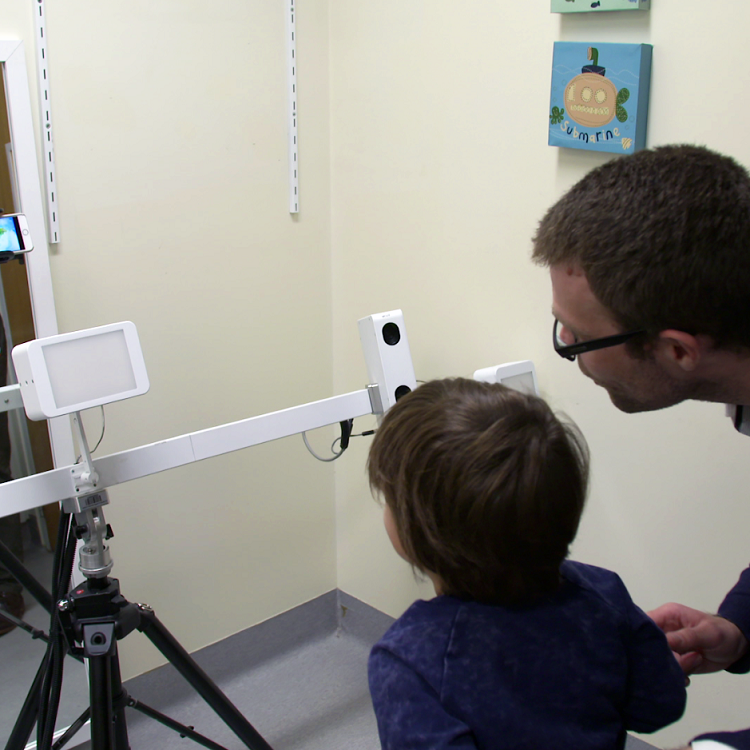
Accuracy of a 2-minute eye-tracking assessment to differentiate young children with and without autismEye-tracking could expedite autism identification/diagnosis through standardisation and objectivity. We tested whether Gazefinder autism assessment, with Classification Algorithm derived from gaze fixation durations, would have good accuracy (area under the curve [AUC] ≥ 0.80) to differentiate 2-4-year-old autistic from non-autistic children.