
Skip to content

Search

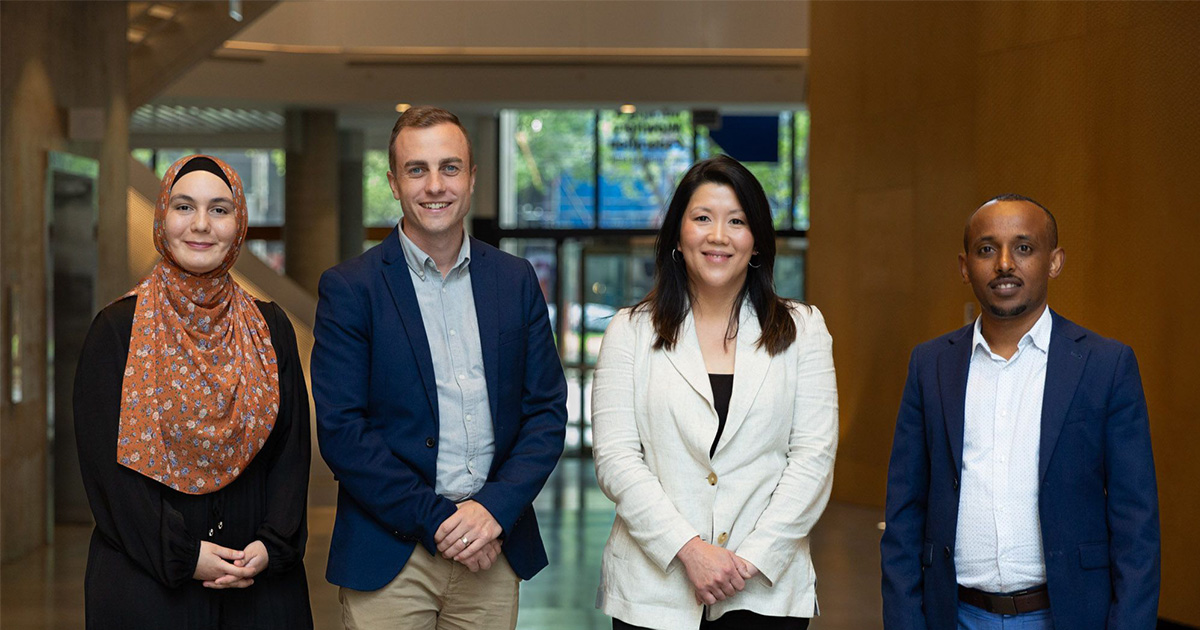
Groundbreaking TB researcher named AAMRI Rising Star

Dr Kefyalew Alene, who heads the Geospatial and Tuberculosis team at The Kids and is a senior research fellow within the Curtin School of Population Health, has used cutting edge technology to transform the way TB transmission is predicted, understood and managed globally.

Prevention better than cure in race to slash rates of TB

The first global review of the effectiveness of current strategies to fight tuberculosis has found preventive therapy is the most effective intervention strategy.  

Impacts of body weight change on treatment outcomes in patients with multidrug-resistant tuberculosis in Northwest Ethiopia

Measuring body weight during therapy has received insufficient attention in poor resource settings like Ethiopia. We aimed to investigate the association between weight change during therapy and treatment outcomes among patients with multidrug-resistant tuberculosis in northwest Ethiopia.

Development and validation of a risk prediction model for pulmonary tuberculosis among presumptive tuberculosis cases in Ethiopia

Early diagnosis and treatment of tuberculosis (TB) is one of the key strategies to achieve the WHO End TB targets. This study aimed to develop and validate a simple, convenient risk score to diagnose pulmonary TB among presumptive TB cases. 

Safety of BCG vaccination and revaccination in healthcare workers

BCG vaccination and revaccination are increasingly being considered for the protection of adolescents and adults against tuberculosis and, more broadly, for the off-target protective immunological effects against other infectious and noninfectious diseases. Within an international randomized controlled trial of BCG vaccination in healthcare workers (the BRACE trial), we evaluated the incidence of local and serious adverse events, as well as the impact of previous BCG vaccination on local injection site reactions (BCG revaccination).

BCG-Induced Immune Training: Interplay between Trained Immunity and Emergency Granulopoiesis

Bacille Calmette-Guérin (BCG) is the most commonly administered vaccine in human history. The medical application of BCG extends far beyond the fight against tuberculosis. Despite its stellar medical record over 100 years, insight into how BCG provides this vast range of benefits is largely limited, both for its pathogen-specific (tuberculosis) as well as pathogen-agnostic (other infections, autoimmunity, allergies, and cancer) effects.

Quantifying undetected tuberculosis in Ethiopia using a novel geospatial modelling approach

Tuberculosis (TB) is the leading infectious cause of death globally, with approximately three million cases remaining undetected, thereby contributing to community transmission. Understanding the spatial distribution of undetected TB in high-burden settings is critical for designing and implementing geographically targeted interventions for early detection and control.

Local progress towards achieving the End TB targets in Ethiopia: A geospatial analysis

Country-level estimates can mask local geographic variations in progress toward achieving World Health Organization's End TB targets. This study aimed to identify spatial variations in progress toward achieving the TB incidence reduction target at a district level in Ethiopia.

Is Systemic Dissemination of BCG Following Neonatal Vaccination Required for Protection Against Mycobacterium tuberculosis?

Tuberculosis (TB) is caused by Mycobacterium tuberculosis (Mtb) and is a leading cause of death. BCG is the only licensed TB vaccine. Preclinical studies have shown that in adults, intravenous administration of BCG improves protection against TB. We hypothesize that intradermal administration of BCG to the human newborn leads to low-grade BCG bacteremia and that this systemic dissemination improves protection against Mtb infection. This hypothesis is based on supporting observations including animal and human studies. It is a testable hypothesis and offers to deliver immediately actionable insight to advance the global efforts against TB.

Mapping tuberculosis prevalence in Africa using a Bayesian geospatial analysis

Worldwide, tuberculosis (TB) remains the leading cause of death from infectious diseases. Africa is the second most-affected region, accounting for a quarter of the global TB burden, but there is limited evidence whether there is subnational variation of TB prevalence across the continent. Therefore, this study aimed to estimate sub-national and local TB prevalence across Africa.