
Search
Parents and caregivers play a critical role in the care of their child peri-operatively. Our team undertook previous research with parents/carers, which identified Australian parents' top 10 research priorities for paediatric anaesthesia and peri-operative medicine.
Asthma remission has emerged as a potential therapeutic goal. However, definitions of remission have primarily focused on adult populations, with limited consensus on how remission should be defined in children.
The aim is to examine whether using a portable spring-infusor device to deliver antibiotics compared with a standard infusion pump (SIP) translated to (i) improve health outcomes, (ii) reduce the length of stay (LoS), and (iii) reduce cost for treatment of exacerbations of cystic fibrosis.
Antisense oligonucleotides are an emerging therapeutic option to treat diseases with known genetic origin. In the age of personalised medicines, antisense oligonucleotides can sometimes be designed to target and bypass or overcome a patient's genetic mutation, in particular those lesions that compromise normal pre-mRNA processing. Antisense oligonucleotides can alter gene expression through a variety of mechanisms as determined by the chemistry and antisense oligomer design.
Leclercia adecarboxylata is a rare cause of septic arthritis in children, and has intrinsic resistance to common antibiotics. We describe two cases of L. adecarboxylata septic arthritis in children that required re-presentation to hospital with prolonged treatment, and highlight the importance of considering L. adecarboxylata as a potential cause of infection among children with penetrating injuries and associated environmental exposure.
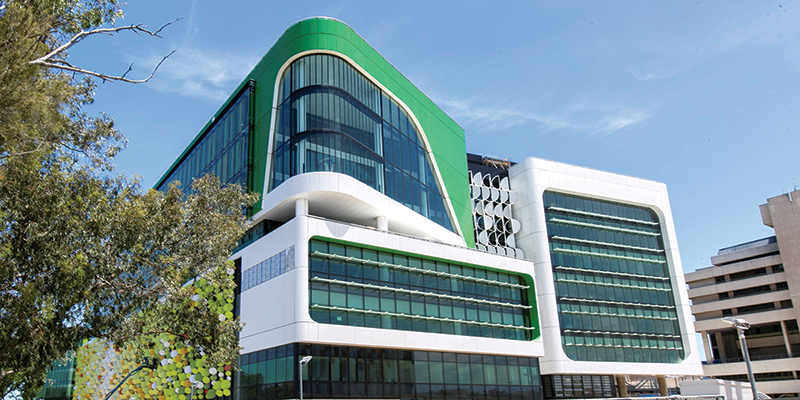
The Kids Research Institute Australia is one of 20 West Australian research facilities to share in $25 million funding under the State Government’s Research Infrastructure Support (RIS) program, through the Future Health Research and Innovation (FHRI) Fund.

An Australian study has revealed the clear link between eating breakfast and academic success, with students who skip breakfast some or all of the time achieving poorer NAPLAN results than children who always eat breakfast.

Six researchers from The Kids Research Institute Australia have been awarded $8.9 million in prestigious Investigator Grants from the National Health and Medical Research Council.
Projects to improve outcomes for leukaemia patients and reduce skin cancer rates in young Aboriginal people have received funding through Cancer Council WA.
The Australian Government has appointed the National Health and Medical Research Council (NHMRC) Council for 2024 to 2027.