
Search
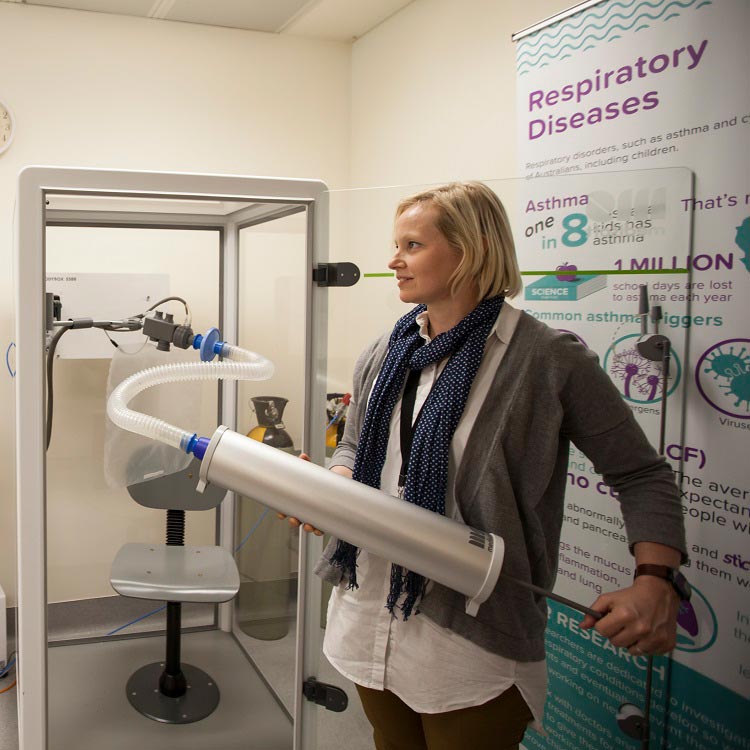
A The Kids Research Institute Australia study published in The Lancet Child & Adolescent Health has found that survivors of very preterm birth face declining lung function
Chronic obstructive pulmonary disease (COPD) is a complex disorder with a high degree of interindividual variability. Gastrointestinal dysfunction is common in patients with COPD and has been proposed to influence the clinical progression of the disease. Using the presence of bile acid(s) (BA) in bronchoalveolar lavage (BAL) fluid as a marker of gastric aspiration, we evaluated the relationships between BAs, clinical outcomes and bacterial lung colonisation.
Microbiome science has been one of the most exciting and rapidly evolving research fields in the past two decades. Breakthroughs in technologies including DNA sequencing have meant that the trillions of microbes (particularly bacteria) inhabiting human biological niches (particularly the gut) can be profiled and analysed in exquisite detail.
Many survivors of preterm birth (<37 weeks gestation) have lifelong respiratory deficits, the drivers of which remain unknown. Influencers of pathophysiological outcomes are often detectable at the gene level and pinpointing these differences can help guide targeted research and interventions. This study provides the first transcriptomic analysis of primary nasal airway epithelial cells in survivors of preterm birth at approximately 1 year of age.
Treatment options for viral lung infections are currently limited. We aimed to explore the safety and efficacy of inhaled ethanol in an influenza-infection mouse model.
Mutation-agnostic treatments such as airway gene therapy have the potential to treat any individual with cystic fibrosis (CF), irrespective of their CF transmembrane conductance regulator (CFTR) gene variants. The aim of this study was to employ two CF rat models, Phe508del and CFTR knockout to assess the comparative effectiveness of CFTR modulators and lentiviral vector-mediated gene therapy.
Myeloperoxidase is released by neutrophils in inflamed tissues. MPO oxidizes chloride, bromide, and thiocyanate to produce hypochlorous acid, hypobromous acid, and hypothiocyanous acid, respectively. These oxidants are toxic to pathogens, but may also react with host cells to elicit biological activity and potential toxicity. In cystic fibrosis and related diseases, increased neutrophil inflammation leads to increased airway MPO and airway epithelial cell exposure to its oxidants.
Asthma exacerbations in children are associated with respiratory viral infection and atopy, resulting in systemic immune activation and infiltration of immune cells into the airways. The gene networks driving the immune activation and subsequent migration of immune cells into the airways remains incompletely understood. Cellular and molecular profiling of PBMC was employed on paired samples obtained from atopic asthmatic children during acute virus-associated exacerbations and later during convalescence.
Cystic Fibrosis (CF) is a genetic condition characterized by neutrophilic inflammation and recurrent infection of the airways. How these processes are initiated and perpetuated in CF remains largely unknown. We have demonstrated a link between the intestinal microbiota-related metabolites bile acids and inflammation in the bronchoalveolar lavage fluid from children with stable CF lung disease.
Developing an effective therapy to overcome carbapenemase-positive Klebsiella pneumoniae (CPKp) is an important therapeutic challenge that must be addressed urgently. Here, we explored a Ca-EDTA combination with aztreonam or ceftazidime-avibactam in vitro and in vivo against diverse CPKp clinical isolates.