
Search
Showing results for "clinikids"
Circumscribed interests encompass a range of different interests and related behaviors that can be characterized by either a high intensity but otherwise usual topic [referred to as restricted interests] or by a focus on topics that are not salient outside of autism [referred to as unusual interests].
The identification of reproducible subtypes within autistic populations is a priority research area in the context of neurodevelopment, to pave the way for identification of biomarkers and targeted treatment recommendations. Few previous studies have considered medical comorbidity alongside behavioural, cognitive, and psychiatric data in subgrouping analyses.
While theory supports bidirectional effects between caregiver sensitivity and language use, and infant language acquisition-both caregiver-to-infant and also infant-to-caregiver effects-empirical research has chiefly explored the former unidirectional path. In the context of infants showing early signs of autism, we investigated prospective bidirectional associations with 6-min free-play interaction samples collected for 103 caregivers and their infants (mean age 12-months; and followed up 6-months later).
Children diagnosed with autism spectrum disorder may be at higher likelihood of experiencing poorer oral health and difficulties accessing dental health care. However, identifying which children on the autism spectrum may be more vulnerable to experiencing dental care difficulties is still unknown.
Autism spectrum disorder (ASD) is a complex neurodevelopmental condition whose biological basis is yet to be elucidated. The Australian Autism Biobank (AAB) is an initiative of the Cooperative Research Centre for Living with Autism (Autism CRC) to establish an Australian resource of biospecimens, phenotypes and genomic data for research on autism.
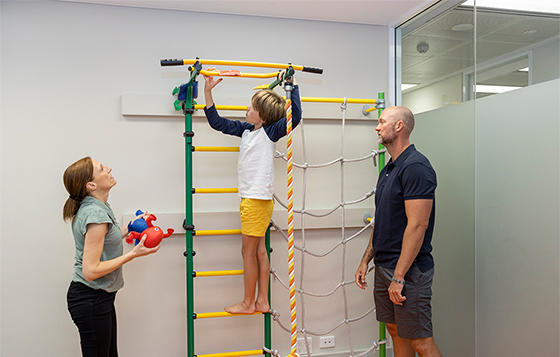
In this blog, Curtin University Occupational Therapy students Julia Walker and Mandy Bull delve into the history of Occupational Therapy in Australia.
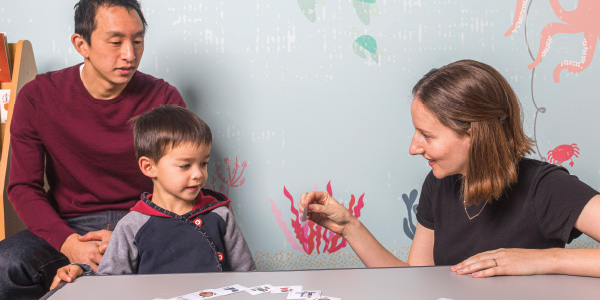
A long-held belief linking gut bacteria to autism has been debunked by an Australian research team that included researchers from CliniKids at The Kids Research Institute Australia.
Andrew Gail Videos Whitehouse Watch and listen to Andrew Alvares PhD PhD Deputy Director (Research); Angela Wright Bennett Professor of Autism
The broad autism phenotype commonly refers to sub-clinical levels of autistic-like behaviour and cognition presented in biological relatives of autistic people. In a recent study, we reported findings suggesting that the broad autism phenotype may also be expressed in facial morphology, specifically increased facial masculinity.
Greater facial asymmetry has been consistently found in children with autism spectrum disorder (ASD) relative to children without ASD. There is substantial evidence that both facial structure and the recurrence of ASD diagnosis are highly heritable within a nuclear family. Furthermore, sub-clinical levels of autistic-like behavioural characteristics have also been reported in first-degree relatives of individuals with ASD, commonly known as the 'broad autism phenotype'.