
Search
Improved public health measures targeting bacterial skin infections are needed to reduce this high burden of skin infections in Western Australia
The association between scabies and skin sores is highly significant and indicates a causal relationship
Scabies and impetigo are common in Timor-Leste, with very high prevalence of scabies in the rural district of Ermera
Prevalence of skin sores and scabies in remote Australian Aboriginal communities remains unacceptably high, with Group A Streptococcus (GAS) the dominant pathogen. We aim to better understand the drivers of GAS transmission using mathematical models.
Scabies and impetigo infections are under-recognised and hence under-treated by clinicians

Three researchers from The Kids Research Institute Australia were recognised as being among Western Australia’s brightest and most innovative scientific minds at last night’s 24th Premier's Science Awards.
Scabies infection is associated with heightened total IgE immunoglobulin and IgE antibodies to scabies antigens, with both being extremely high for crusted scabies patients. The IgE antibodies cross-react with house dust mite allergens with high reactivity found to the minor allergen arginine kinase.

The Kids Research Institute Australia researchers have confirmed that skin infections in many Aboriginal children across northern Western Australia are going unrecognised.
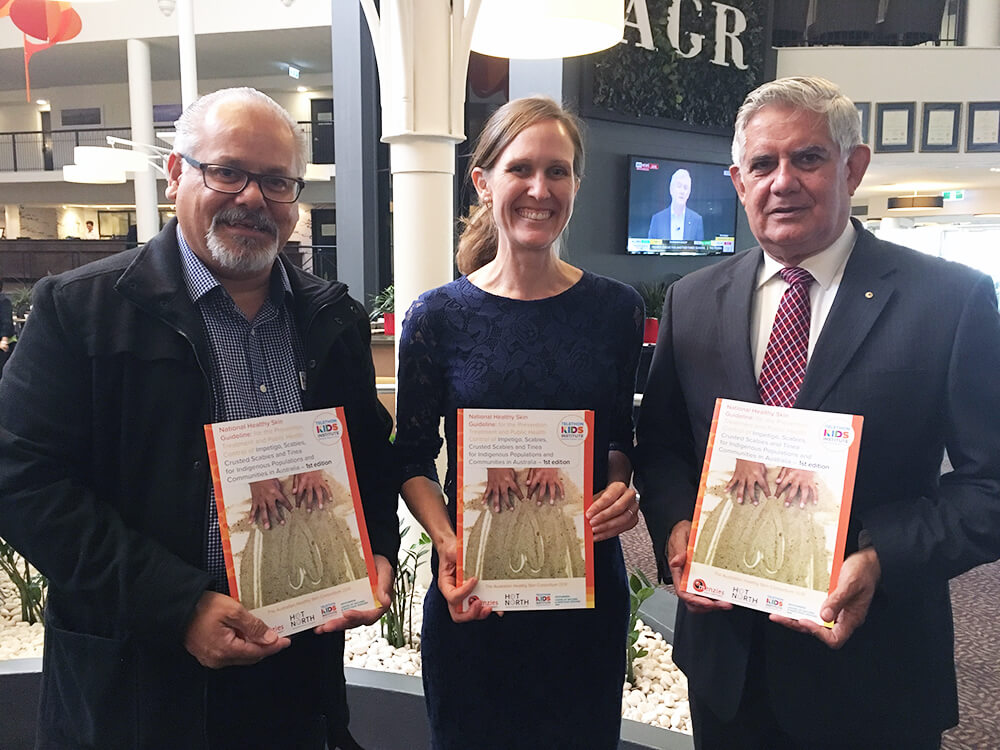
Researchers have developed the first National Healthy Skin Guideline to address record rates of skin infections in Australia’s Indigenous communities.
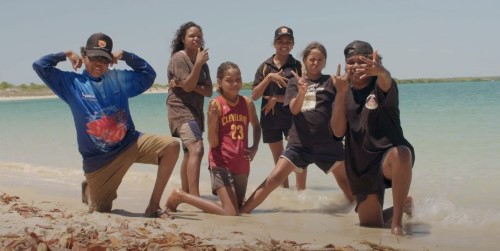
The Kids Research Institute Australia researchers have launched the Hip Hop 2 SToP video featuring school kids participating in their SToP Trial project designed to see, treat and prevent skin infections in WA’s Kimberley region.