Search
Research
Comorbidities and quality of life in children with intellectual disabilityMany children with intellectual disability live with medical comorbidities. This study examined the impacts of comorbidities on quality of life (QOL) of children with intellectual disabilities and whether impacts varied with caregiver perceptions that medical needs had been met.
Research
Parent-reported Areas of Greatest Challenge for their ADHD and/or Autistic ChildrenThis study aimed to understand how parents describe the most challenging behaviors exhibited by their children diagnosed with autism and/or ADHD, how those behaviours impact their family, and whether challenges are directly related to the core characteristics of these conditions.
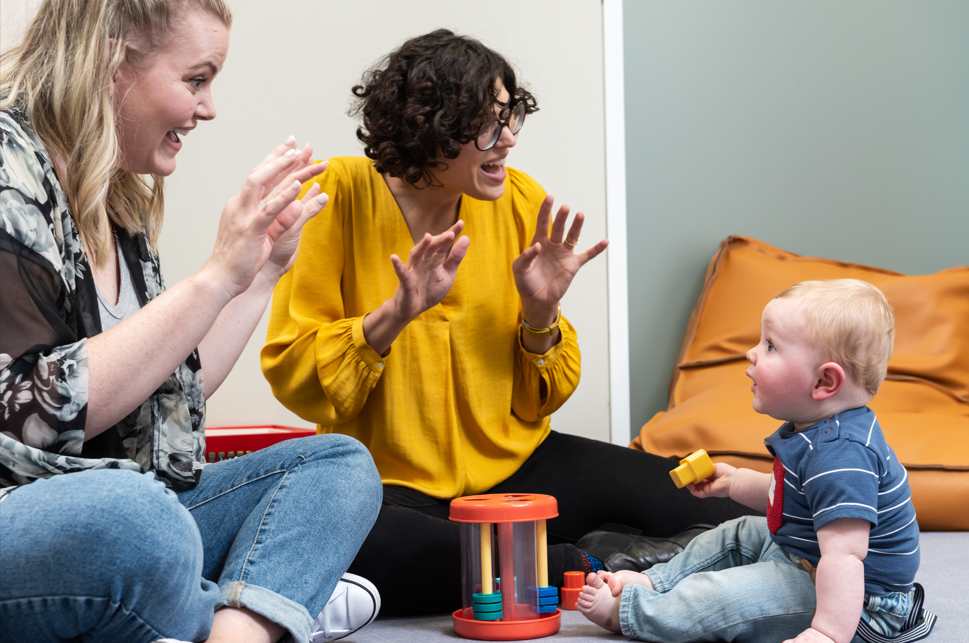
Inklings is a program to support babies aged 6-18 months showing early differences in their social interaction and communication development.
Research
Non-pharmacological interventions for autistic children: An umbrella reviewThe breadth of available non-pharmacological interventions for autistic children, with varying evidence for efficacy summarised in multiple systematic reviews, creates challenges for parents, practitioners, and policymakers in navigating the research evidence. In this article, we report the findings of an umbrella review of 58 systematic reviews of non-pharmacological interventions for autistic children (aged 0–12 years).
Research
Occurrence of psychosis and bipolar disorder in adults with autism: A systematic review and meta-analysisEvidence suggests that individuals with autism spectrum disorder have increased rates of co-occurring psychosis and/or bipolar disorder. Considering the peak age of onset for psychosis and bipolar disorder occurs in adulthood, we investigated the co-occurrence of these disorders in adults with autism.
Research
Developing an Online Tool to Promote Safe Sun Behaviors With Young Teenagers as Co-researchersDespite education about the risks of excessive sun exposure, teenagers in Australia are sun-seeking, with sunburn common in summer. Conversely, some regular (time-limited) exposure to sunlight (that avoids sunburn) is necessary for vitamin D and healthy bones and other molecules important for immune and metabolic health. New interventions are thus required to better support teenagers to make healthy and balanced decisions about their sun behaviors.
Research
Interactions between the lipidome and genetic and environmental factors in autismAutism omics research has historically been reductionist and diagnosis centric, with little attention paid to common co-occurring conditions (for example, sleep and feeding disorders) and the complex interplay between molecular profiles and neurodevelopment, genetics, environmental factors and health. Here we explored the plasma lipidome in 765 children (485 diagnosed with autism spectrum disorder (ASD)) within the Australian Autism Biobank.
Research
The Utility of Natural Language Samples for Assessing Communication and Language in Infants Referred with Early Signs of AutismNatural Language Sampling (NLS) offers clear potential for communication and language assessment, where other data might be difficult to interpret. We leveraged existing primary data for 18-month-olds showing early signs of autism, to examine the reliability and concurrent construct validity of NLS-derived measures coded from video-of child language, parent linguistic input, and dyadic balance of communicative interaction-against standardised assessment scores. Using Systematic Analysis of Language Transcripts (SALT) software and coding conventions, masked coders achieved good-to-excellent inter-rater agreement across all measures.
Research
Toward better characterization of restricted and unusual interests in youth with autismDespite being highly prevalent among people with autism, restricted and unusual interests remain under-researched and poorly understood. This article confirms that restricted interests are very frequent and varied among children and adolescents with autism. It also further extends current knowledge in this area by characterizing the relationship between the presence, number, and type of restricted interests with chronological age, sex, cognitive functioning, and social and communication symptoms.
Research
A Parent-Mediated Intervention for Newborns at Familial Likelihood of Autism: Initial Feasibility Study in the General PopulationDevelopmental theory and previous studies support the potential value of prodromal interventions for infants at elevated likelihood of developing autism. Past research has supported the efficacy of parent-mediated prodromal therapies with infants from as early as 7 months. We outline the rationale for implementing interventions following this model from even earlier in development and report on the feasibility of a novel intervention developed following this model of parent-mediated infant interventions.