
Search

Mapping when Respiratory Syncytal Virus (RSV) reaches its seasonal peak will assist how future vaccination programs are carried out.
The abstract screening process of systematic reviews can take thousands of hours by two researchers. We aim to determine the reliability and validity of Research Screener, a semi-automated abstract screening tool within a systematic review on non-specific and broader effects of respiratory vaccines on acute lower respiratory infection hospitalisations and antimicrobial prescribing patterns in young children.
In 2024, the government of Western Australia introduced 'nirsevimab', a monoclonal antibody offering protection from respiratory syncytial virus (RSV), for eligible infants. This study explores why parents of infants who were eligible to receive nirsevimab opted to decline or delay the immunisation.
Iron deficiency (ID) is the most common nutritional deficiency affecting young children. Serum ferritin concentration is the preferred biomarker for measuring iron status because it reflects iron stores; however, blood collection can be distressing for young children and can be logistically difficult. A noninvasive means to measure iron status would be attractive to either diagnose or screen for ID in young children.
Pregnant women are advised to take folic acid (FA) supplements before conception and during the first trimester of pregnancy. Many women continue FA supplementation throughout pregnancy, and concerns have been raised about associations between excessive FA intake and adverse maternal and child health outcomes.
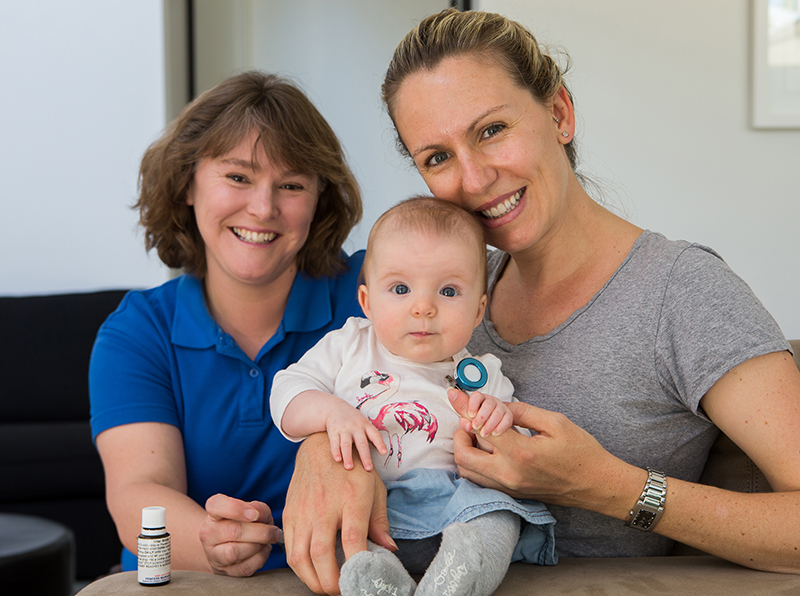
A study led by The Kids Research Institute Australia has suggested vitamin D supplementation in babies is no match for sunlight when it comes to preventing eczema.

This project aims to examine whether maternal probiotic supplementation promotes an enhanced immunomodulatory breastmilk composition likely to promote infant oral tolerance, and reduce food allergy in breastfed children.

The vision of the Nutrition in Early Life team is to work together with the community to produce quality research, for improving our knowledge of how a mother’s diet during pregnancy and breastfeeding can improve both her and her child’s health.
Nutrition is a modifiable lifestyle factor that may play a role in allergic disease prevention. This article summarizes current evidence on the antenatal diet as a consideration for strategies to prevent child food allergy. As eczema in early infancy substantially increases the risk of food allergy development, the effects of maternal dietary intakes during pregnancy on infant eczema outcomes will also be discussed.
Common food allergens have been detected in breast milk with wide inter-individual variations in concentrations. As maternal factors, such as age, smoking, and body mass index have been associated with breast milk composition, we aimed to identify maternal characteristics associated with the concentration of food allergens in breast milk.