
Search
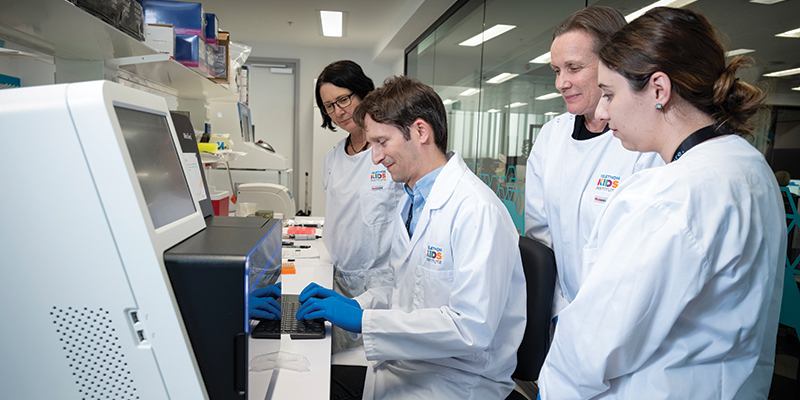
The Kids Research Institute Australia researchers are at the forefront of rapid improvements in the diagnosis of rare diseases.
Genetic diagnosis plays a crucial role in rare diseases, particularly with the increasing availability of emerging and accessible treatments. The International Rare Diseases Research Consortium (IRDiRC) has set its primary goal as: "Ensuring that all patients who present with a suspected rare disease receive a diagnosis within one year if their disorder is documented in the medical literature".

The aim of the Translational Intelligence team is to understand how individual bases in our genome predispose, alter and interact in normal and disease contexts.
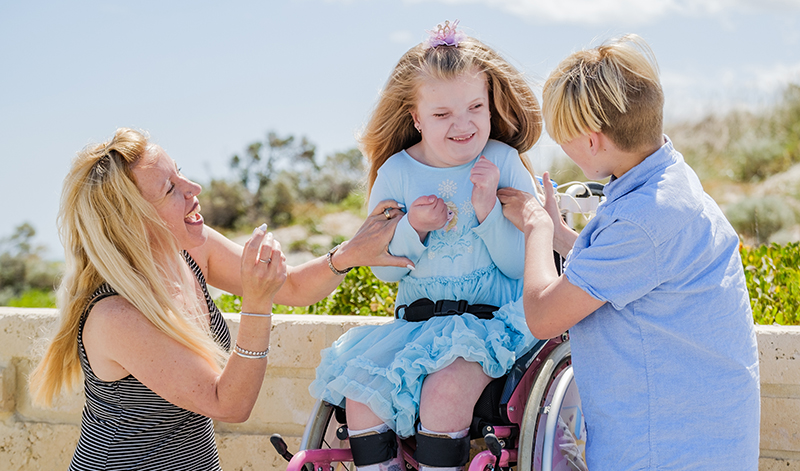
In WA, 60,000 kids live with a rare disease, and of those about half do not have a diagnosis. At The Kids, researchers are leading the charge in developing a method to identify genetic variations, so that kids like Charlotte can get answers.

Recently, researchers from The Kids Research Institute Australia, Perth Children’s Hospital and The University of Western Australia contributed to three major international publications, collectively reinforcing rare diseases as a critical, community-wide health priority.
Streptococcus pneumoniae is a leading cause of pneumonia and meningitis worldwide. Many different serotypes co-circulate endemically in any one location. The extent and mechanisms of spread and vaccine-driven changes in fitness and antimicrobial resistance remain largely unquantified.
To describe trends, age, and sex-specific patterns of population hospital admissions with a diagnosis of craniosynostosis (CS) in Australia. Population data for hospital separations (in-patient) from public and private hospitals (July 1996-June 2018) were obtained from the publicly available Australian Institute of Health and Welfare (AIHW) National Hospital Morbidity Database.
Pathogenic variants in the cyclin-dependent kinase-like 5 (CDKL5) gene are associated with CDKL5 deficiency disorder (CDD), a severe X-linked developmental and epileptic encephalopathy.
Estimates of the prevalence of intellectual disability or autism spectrum disorder may vary depending on the methodology, geographical location, and sources of ascertainment. The National Disability Insurance Scheme in Australia was introduced progressively from 2016 to provide individualized funding for eligible people with a significant and permanent disability.
Accurate knowledge of the relationship between craniofacial anomalies (CFA), intellectual disability (ID) and autism spectrum disorder (ASD) is essential to improve services and outcomes. The aim is to describe the association between CFA, ID and ASD using linked population data.