
Search
Hereditary cancer predisposition syndromes (HCPS) account for at least 10% of paediatric cancers.1 Li‐Fraumeni syndrome (LFS) is a dominant HCPS caused by mutations in the TP53 gene and is associated with an 80–90% lifetime risk of cancer, commencing in infancy.2 Children of affected individuals are at 50% risk of inheriting the family mutation.
A report outlining key steps to tackle a common and aggressive childhood brain tumor is gaining rapid momentum after attracting international attention.
The Global Symposium on Childhood Brain Tumours is bringing the world's premier childhood brain tumour researchers and scientists together in Perth.
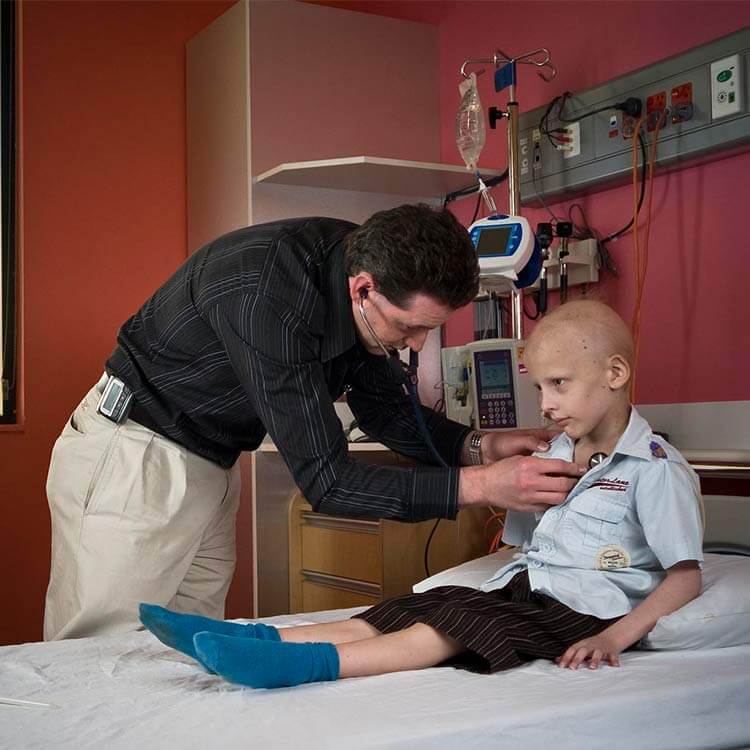
It is the kids he treats in his role as a paediatric oncologist that motivate Dr Nick Gottardo in his work as a The Kids Research Institute Australia cancer researcher.
Approximately 770 children are diagnosed with cancer in Australia every year. Research has explored their experiences and developed recommendations for improving support provided to families. These have included the provision of psychology services, improved communication between healthcare professionals and parents, and increased information for families.
Each year, approximately 1000 children in Australia and New Zealand, aged 0–14 years, are diagnosed with cancer. Despite paediatric cancer accounting for less than 1% of all cancer cases, the impact on their families and communities is profound and disproportionate.
Our international team highlights issues with efficacy reports in several studies on DMG with the new drug ONC201.
Pineal parenchymal tumors are rare neoplasms for which evidence-based treatment recommendations are lacking. These tumors vary in biology, clinical characteristics, and prognosis, requiring treatment that ranges from surgical resection alone to intensive multimodal antineoplastic therapy.
The Zero Childhood Cancer Program is a precision medicine program to benefit children with poor-outcome, rare, relapsed or refractory cancer. Using tumor and germline whole genome sequencing (WGS) and RNA sequencing (RNAseq) across 252 tumors from high-risk pediatric patients with cancer, we identified 968 reportable molecular aberrations.
Tropomyosin receptor kinase (TRK) fusions are detected in less than 2% of central nervous system tumors. There are limited data on the clinical course of affected patients.