
Search
Expanded carrier screening (ECS) for recessive monogenic diseases requires prior knowledge of genomic variation, including DNA variants that cause disease. The composition of pathogenic variants differs greatly among human populations, but historically, research about monogenic diseases has focused mainly on people with European ancestry. By comparison, less is known about pathogenic DNA variants in people from other pa
High-grade gliomas including glioblastoma (GBM) and diffuse midline gliomas (DMG) represent the most lethal and aggressive brain cancers where current treatment modalities offer limited efficacy. Chimeric antigen receptor (CAR) T cell therapies have emerged as a promising strategy, boasting tumor-specific targeting and the unique ability to penetrate the blood-brain barrier.
The mitogen-activated protein kinase (MAPK) pathway signaling pathway is one of the most commonly mutated pathways in human cancers. In particular, BRAF alterations result in constitutive activation of the rapidly accelerating fibrosarcoma-extracellular signal-regulated kinase-MAPK significant pathway, leading to cellular proliferation, survival, and dedifferentiation.
Ependymomas (EPN) are the third most common malignant brain cancer in children. Treatment strategies for pediatric EPN have remained unchanged over recent decades, with 10-year survival rates stagnating at just 67% for children aged 0-14 years. Moreover, a proportion of patients who survive treatment often suffer long-term neurological side effects as a result of therapy. It is evident that there is a need for safer, more effective treatments for pediatric EPN patients.
Brain cancer and leukemia are the most common cancers diagnosed in the pediatric population and are often treated with lifesaving chemotherapy. However, chemotherapy causes severe adverse effects and chemotherapy-induced peripheral neuropathy (CIPN) is a major dose-limiting and debilitating side effect.
Cranial radiation therapy is essential in treating many pediatric cancers, especially brain tumors; however, its use comes with the risk of developing second malignancies. Cranial radiation-induced gliomas (RIGs) are aggressive high-grade tumors with a dismal prognosis, for which no standard therapy exists. A definitive molecular signature for RIGs has not yet been established. We sought to address this gap by performing a systematic review and meta-analysis of the molecular features of cranial RIGs.
Medulloblastoma is the most common malignant paediatric brain tumour and a leading cause of cancer-related mortality and morbidity. Existing treatment protocols are aggressive in nature resulting in significant neurological, intellectual and physical disabilities for the children undergoing treatment. Thus, there is an urgent need for improved, targeted therapies that minimize these harmful side effects.
Children with medulloblastoma and ependymoma are treated with a multidisciplinary approach that incorporates surgery, radiotherapy, and chemotherapy; however, overall survival rates for patients with high-risk disease remain unsatisfactory. Data indicate that plant-derived cannabinoids are effective against adult glioblastoma; however, preclinical evidence supporting their use in pediatric brain cancers is lacking. Here we investigated the potential role for Δ9-tetrahydrocannabinol (THC) and cannabidiol (CBD) in medulloblastoma and ependymoma. Dose-dependent cytotoxicity of medulloblastoma and ependymoma cells was induced by THC and CBD in vitro, and a synergistic reduction in viability was observed when both drugs were combined.
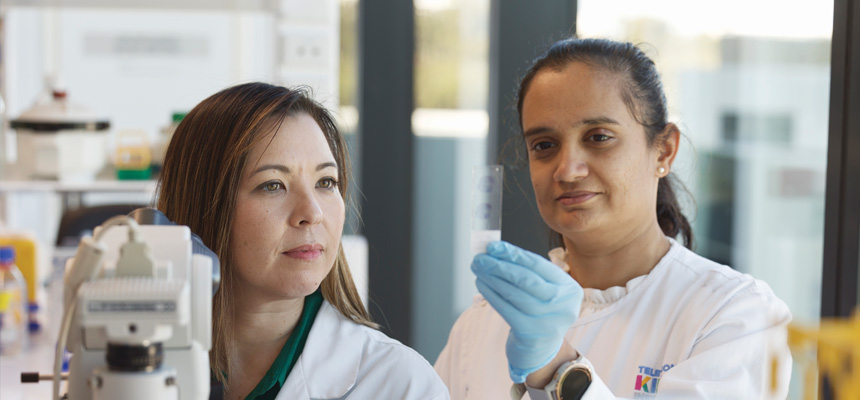
The WA Kids Cancer Centre has a suite of world-leading research projects to unlock new treatments for childhood cancers.
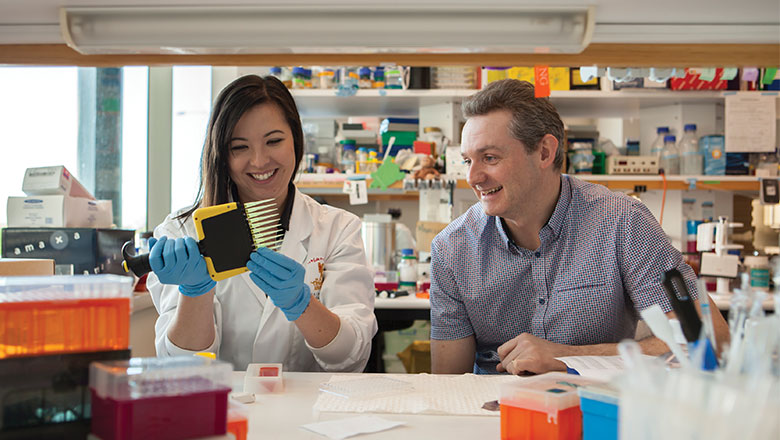
Dr Nick Gottardo and Dr Raelene Endersby from The Kids Research Institute Australia are the driving force behind an innovative, global action group on child brain cancer.