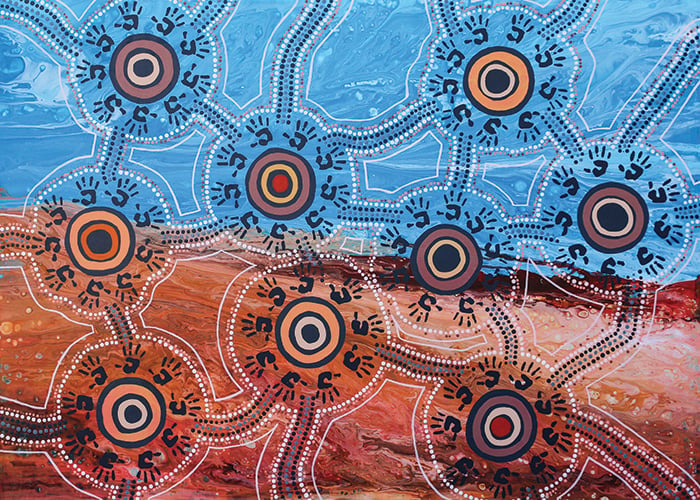
“Gathering Circles” by Luke Riches
The unique circumstances that upended 2020 for so many brought both challenge and opportunity for members of the SToP (See, Treat, Prevent skin sores and scabies) Trial team working with remote Aboriginal communities across the Kimberley.
Faced with a global pandemic, the prospect of COVID-19 spreading to remote communities, and the reality of the high chronic disease burden experienced by remote living Aboriginal people in the Kimberley region, Aboriginal leaders recommended all non-essential visiting services to remote communities, including The Kids research, cease.
The decision could have brought vital research occurring across the Kimberley to a halt, but building on already established relationships, the SToP Trial team instead pivoted – using virtual technology to continue priority health promotion activities and engage with partners they were no longer able to visit in person.
“The SToP Trial team has been working with nine communities throughout the Kimberley region for the past three years, identifying children with skin infections and referring them to the clinic for treatment, as well as working with local services to enhance skin health practice and prevention,” said Associate Professor Asha Bowen, Head of Skin Health at the Wesfarmers Centre of Vaccines and Infectious Diseases, based at The Kids Research Institute Australia.
There has traditionally been a large gap between the discovery of public health knowledge and its application in practice. With skin infections in remote Aboriginal children among the highest in the world, turning research into a community health message quickly is a high priority.
Skin infections are common, and not always prioritised for treatment. They cause itching, discomfort, disturbed sleep and school absence. If untreated, skin infections can lead to sepsis, kidney disease and rheumatic heart disease.
For these reasons, according to Wesfarmers Centre PhD student Tracy McRae, early intervention – and even better, prevention of skin infections altogether – is the most powerful weapon in tackling these possible long-term effects.
“Our skin plays a vital role in keeping us healthy, so the information gained from the SToP Trial will contribute to the ultimate goal of reducing the number of children and families affected by preventable diseases caused by skin infections,” Mrs McRae said.
“By working in partnership with communities, Kimberley Aboriginal Medical Services, WA Country Health Service (WACHS) – Kimberley, and Nirrumbuk Environmental Health and Services, we’re able to translate research into practice quickly.
“We’re turning our research into community health messages and practices, and training people in the community to prevent, identify and treat skin infections.
“We know that translating research into targeted prevention messages and empowering communities to take a lead role are the key ingredients to create change.”
The above art piece by Bardi artist Luke Riches titled “Gathering Circles” represents the 9 Aboriginal communities that work with The Kids Research Institute Australia Skin Team on the SToP Trial. The circles vary in colour and composition, just as the communities hold their own unique identities. The backdrop of pindan orange and coastal blues convey the land and sea setting that makes the Kimberley so beautiful. The dot painted trails show a connection between the communities, of both foot trails and song lines that unite the people.
