
Rapid results reveal junk ad overload
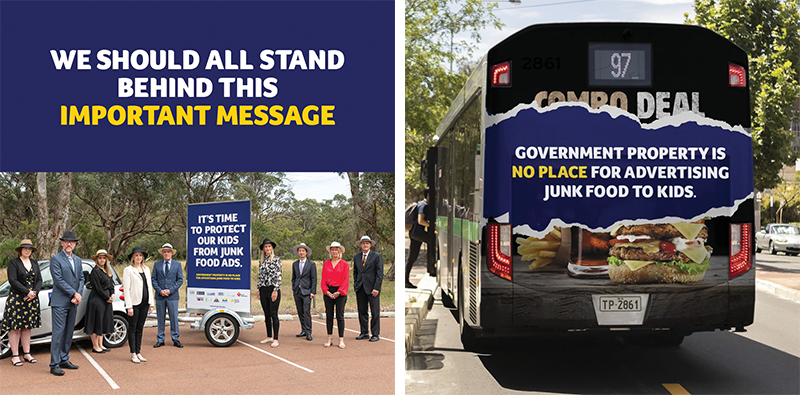
CEOs of leading health agencies launched a joint statement calling on the WA Government to ban junk-food ads on State-owned assets
Dr Trapp and a team of researchers mapped the advertising environment within a 500m radius of 64 randomly selected public and private primary, K–12 and secondary schools across Perth, covering high and low socioeconomic areas.
Working in pairs, research assistants trawled the streets by foot and took a geotagged photo of every outdoor ad they found. They recorded as much information as possible about each ad, including type (billboard, bus shelter, freestanding); whether it was advertising food or non-food; healthy or unhealthy food; and proximity to schools and food businesses.
The researchers identified 5,636 outdoor ads, with 30 per cent of those (1,708) devoted to food. Of those food ads, 74 per cent were for unhealthy foods – and one in three of those unhealthy food ads was for alcohol.
“Only 8 per cent of the food ads featured any kind of healthy food item,” Dr Trapp said.
Schools in lower socioeconomic areas had a higher proportion of total food ads, unhealthy food ads and alcohol ads.
The team also recreated bus, train and walking routes to 24 schools to calculate how many junk food ads kids might typically see on their way to and from school.
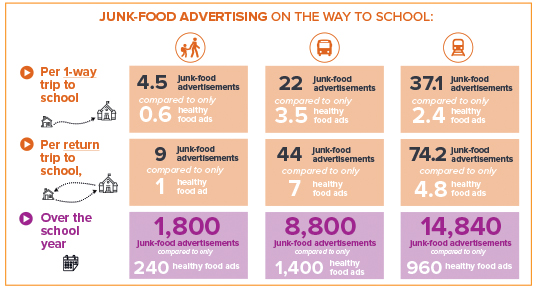
“If kids took the train to school, it worked out to be on average 37 junk food ads they were exposed to per one-way trip, compared to 2.4 healthy food ads,” Dr Trapp said. “The top three foods advertised were sugar-sweetened beverages, fast foods, and alcohol.
f you assume the amount and proportion of junk food ads stay constant, on average, Perth school children would be exposed to just under 15,000 junk food ads on their journey to and from school over the course of a year, compared to only 960 healthy food ads.
“It was less for catching the bus and less for walking to school but it was still really high – and when you compare the number of ads for a healthy food product versus an unhealthy food product, it’s outrageous.”
Dr Trapp said it was well established that junk food advertising was linked to kids’ food preferences, the types of food they pestered parents to let them eat, and their dietary intake and weight status, however, much of the research on children’s exposure to junk food advertising so far had focused on television advertising.
“Very little research has quantified what’s going on in our outdoor spaces, and what’s interesting is that compared to TV advertising, with outdoor advertising you can’t switch it off – it’s always ‘on’ compared to other mediums of advertising,” she said.