
An international clinical trial led by The Kids Research Institute Australia Cancer Centre is trialling a drug which could increase cure rates for aggressive forms of childhood brain cancer.
Baxter Hutchinson was diagnosed with two life-threatening brain tumours at the age of 17 – receiving the devastating news that one of the tumours was inoperable. Since then he has undergone surgery, more than 40 rounds of radiotherapy and seven rounds of chemotherapy. Now in remission, he credits being on a clinical trial with saving his life.
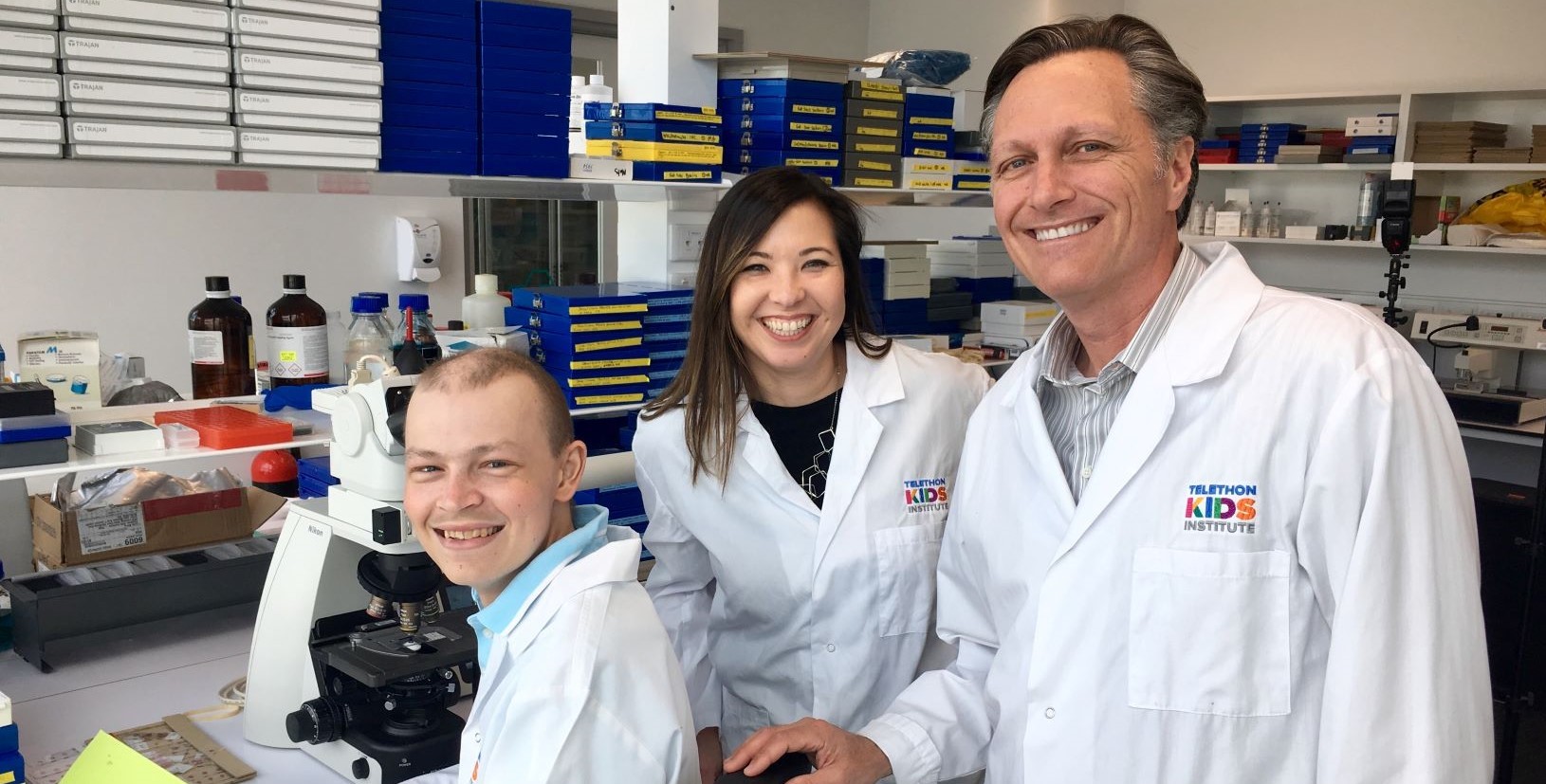 Baxter with Dr Raelene Endersby and The Kids Research Institute Australia Director Jonathan Carapetis
“The clinical trial was highly important in my journey as the treatment not only managed to reduce the size of my tumour but it completely eliminated it, which is quite rare in brain cancer patients,” Baxter said. “The trial basically saved my life.”
Baxter also believes he won the location lottery – knowing none of it would have been possible if he had been based elsewhere in the world.
“I was incredibly lucky to have access to a clinical trial specific to my type of brain tumour as it was only available in America, Germany and right here in Perth,” he said. “Some patients like myself are not fit to fly, so having access to clinical trials in WA is vital to improve the survival rate in brain cancer here.”
Now, The Kids cancer researchers are delivering a new clinical trial to help kids like Baxter around the globe – and it is all being led from WA.
The SJ-ELIOT trial, running in Australia and the United States, is the first to test the safety and effectiveness of the drug prexasertib in combination with chemotherapy treatments for medulloblastoma – which accounts for about 20 per cent of all childhood brain tumours. It’s hoped the novel drug combination will increase cure rates for aggressive forms of childhood brain cancer.
Head of the Oncology and Haematology Department at Perth Children’s Hospital and The Kids researcher, Professor Nick Gottardo, is leading the clinical trial with fellow The Kids co-head of brain cancer research, Dr Raelene Endersby. He said approximately 30 per cent of children diagnosed with medulloblastoma died of the disease and for those that were cured, survival came at a heavy cost.
