
See, Treat, Prevent Skin Sores and Scabies (SToP) Trial
Healthy skin is important for maintaining overall health and wellbeing. Some skin infections, if untreated, can lead to serious downstream health complications such as heart disease, kidney disease, or sepsis.
Investigators
Chief investigators
Professor Asha Bowen, Professor Jonathan Carapetis, Professor Steven Tong, Professor Julianne Coffin, Professor Andrew Steer, Associate Professor Roz Walker, Doctor Julie Marsh, Mr Raymond Christophers
Healthy Skin Researchers
Dr Hannah Thomas, Tracy McRae, Stephanie Enkel, Marianne Mullane
Project description
Healthy skin is important for maintaining overall health and wellbeing. Some skin infections, if untreated, can lead to serious downstream health complications such as heart disease, kidney disease, or sepsis.
The See, Treat, Prevent Skin Sores and Scabies (SToP) Trial is a large clinical trial operating in the Kimberley region of WA, which aims to decrease the burden of skin sores in remote-living school-aged Aboriginal children by 50 per cent. In an effort to improve the awareness, detection, and treatment of skin infections, the SToP Trial is evaluating a package of activities aimed at Seeing, Treating and Preventing skin infections:
Seeing
- Implementing school-based screening surveillance activities to check kids’ skin for infections and refer them to their local clinic if they need treatment.
- Providing training for health workers, school staff and community members to improve detection of skin infections.
Treating
- Making available in community clinics streamlined evidence-based treatment for skin infections that are safe, effective, less invasive and easier for people to manage.
- Providing training for health workers to improve treatment of skin infections.
Preventing
- Working with local communities to co-design and deliver community-driven skin-related health promotion and environmental health resources.
- Building the capacity of children, through interactive workshops, to recognise skin infections.
- The innovative trial is the first Australian healthy skin study to incorporate environmental health and health promotion elements.
Operating from 2016 until 2023, the SToP Trial is a collaboration between The Kids Research Institute Australia, Kimberley Aboriginal Medical Services, WA Country Health Services – Kimberley, and Nirrumbuk Environmental Health Services. Nine Kimberley Aboriginal communities participated in the SToP Trial.
The results of the SToP Trial were interpreted with communities in mid-2023 prior to presentation to stakeholders at a September workshop in Broome.
Partners
Kimberley Aboriginal Medical Services (KAMS), Western Australia Country Health Service-Kimberley (WACHS-K), Nirrumbuk Environmental Health Services
External collaborators
- Menzies School of Health Research
- University of Melbourne, Doherty Institute
- University of Western Australia
- Western Australia Department of Education, Kimberley Region
- Murdoch University
- Catholic Education WA
Funders
The SToP Trial is funded by the National Health and Medical Research Council (NHMRC) and WA Department of Health Government (Healthway).
Gathering Circles – the SToP Trial Story
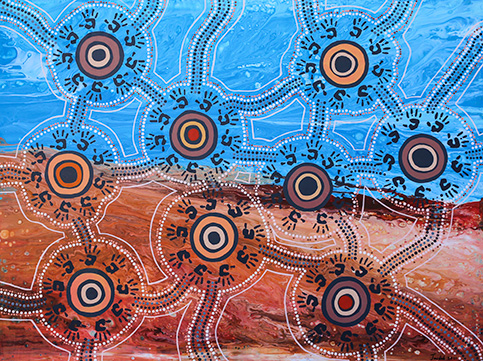
Gathering Circles, painted by Bardi man Luke Riches (2020), tells the story of the The SToP Trial. The circles represent the nine Aboriginal communities working with the SToP Trial. In Riches’ words “The circles vary in colour and composition, just as the communities hold their own unique identities. The backdrop of pindan orange and coastal blues convey the land and sea setting that makes the Kimberley so beautiful. The dot painted trails show a connection between the communities, of both foot trails and song lines that unite the people”.
Community-led Healthy Skin Resources
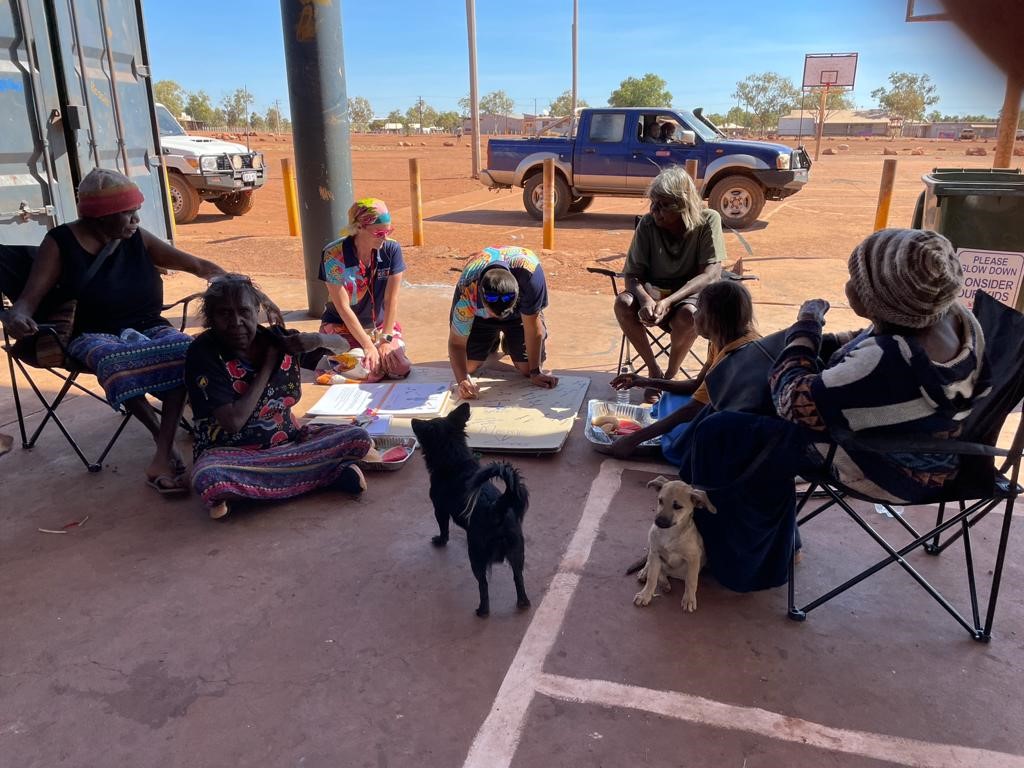
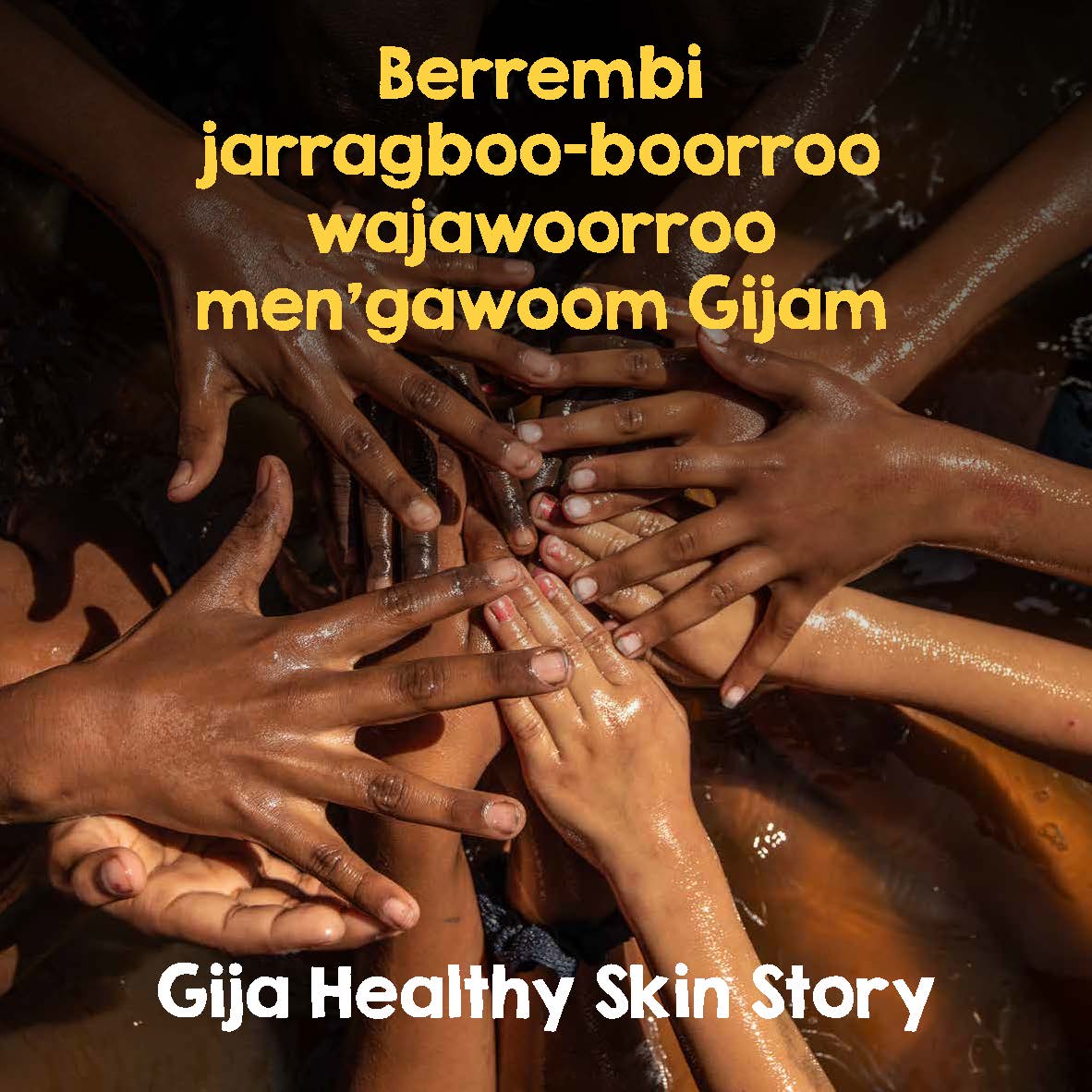
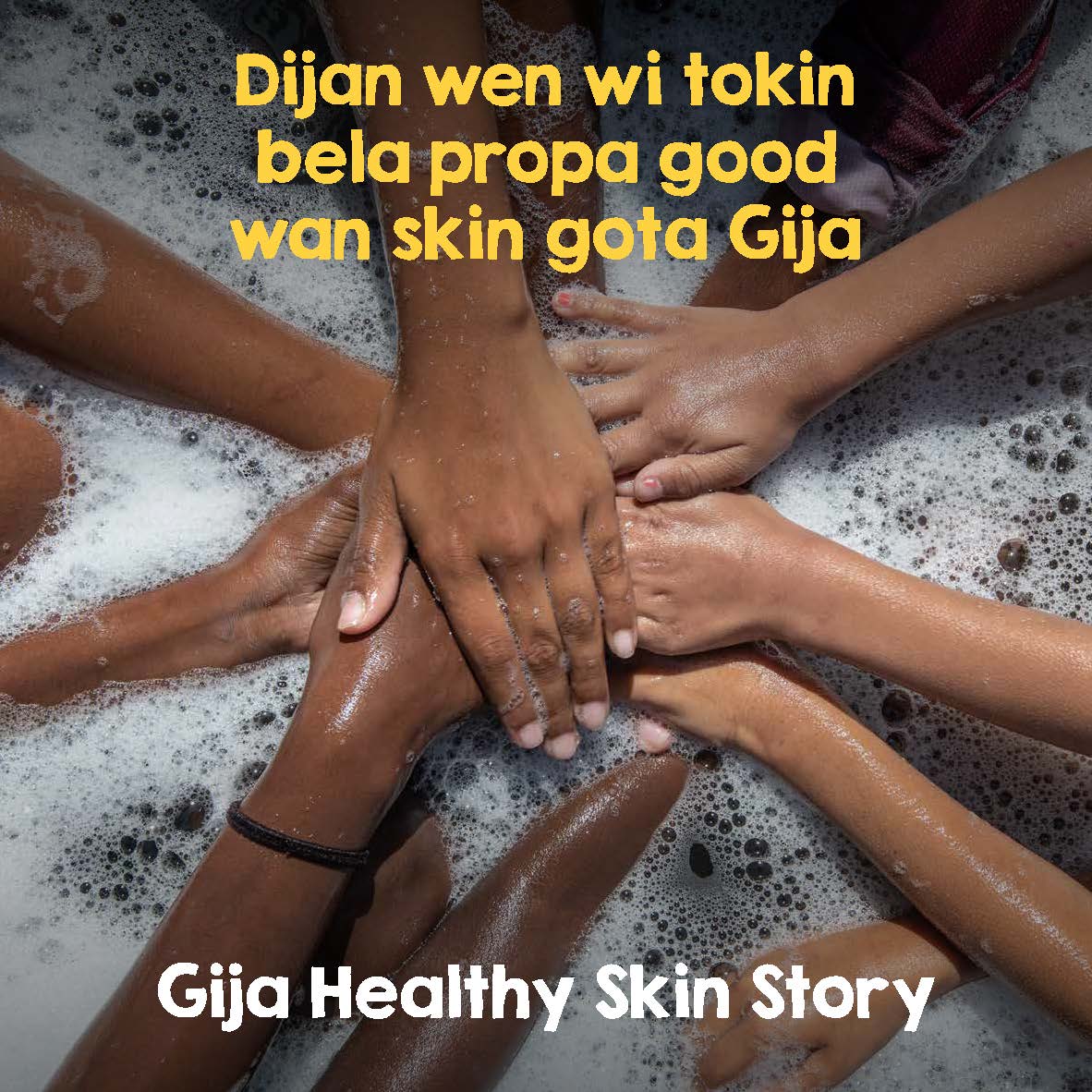
A number of community-led healthy skin resources have been co-designed during the SToP Trial, including a HipHop music video and a suite of healthy skin booklets in local language.
Led by communities in the Dampier Peninsula, HipHop2SToP was planned and produced in 2020 and involved 45 children from the region.
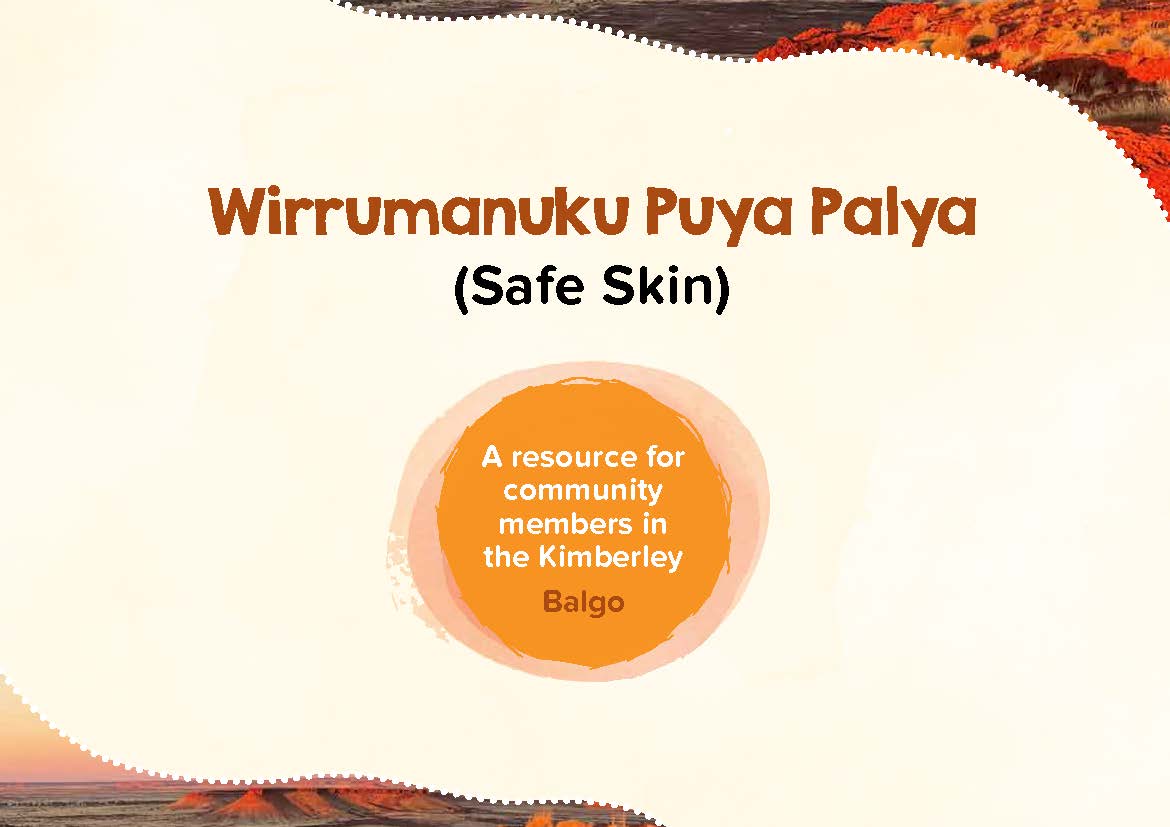
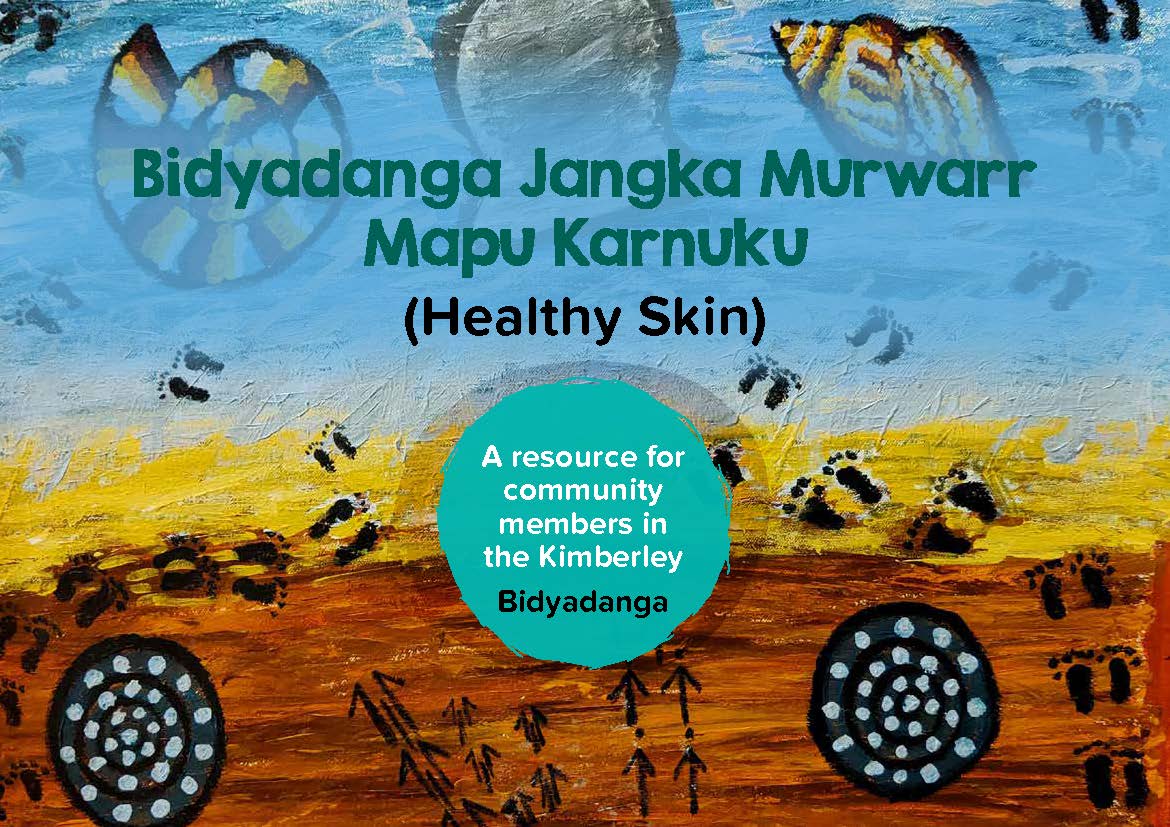
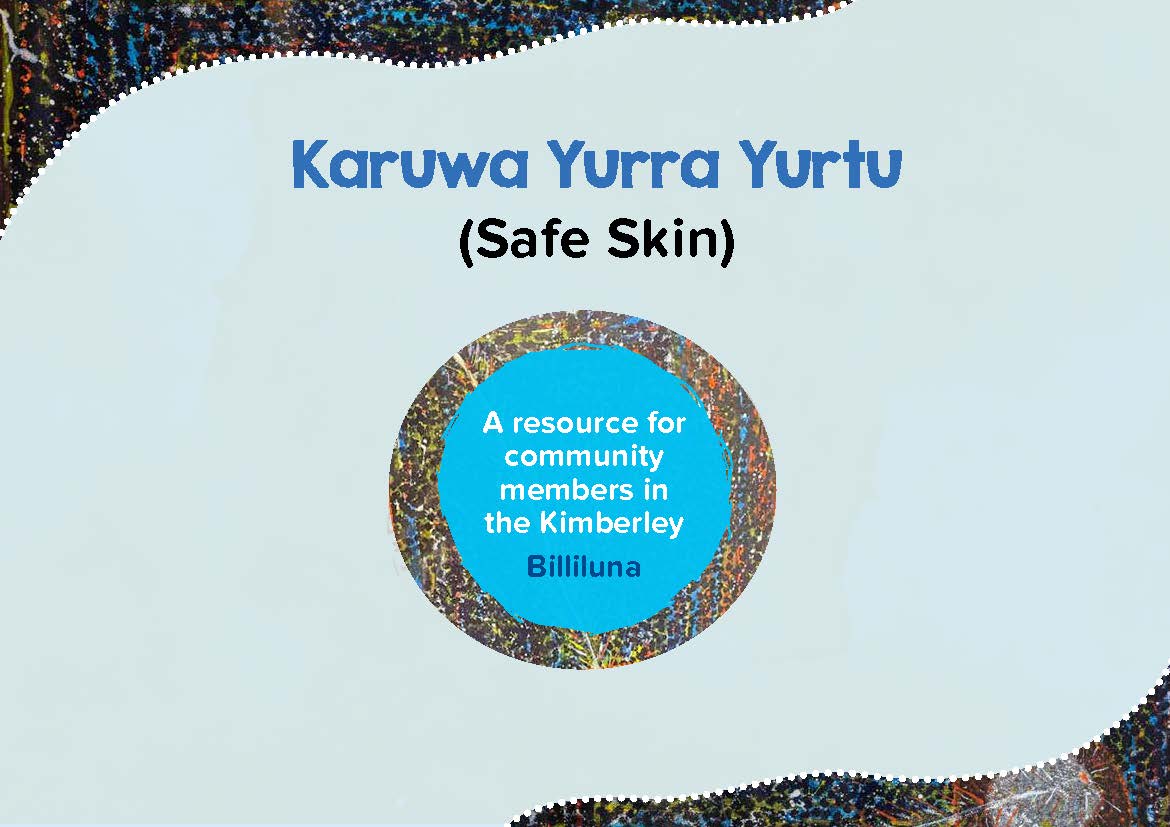
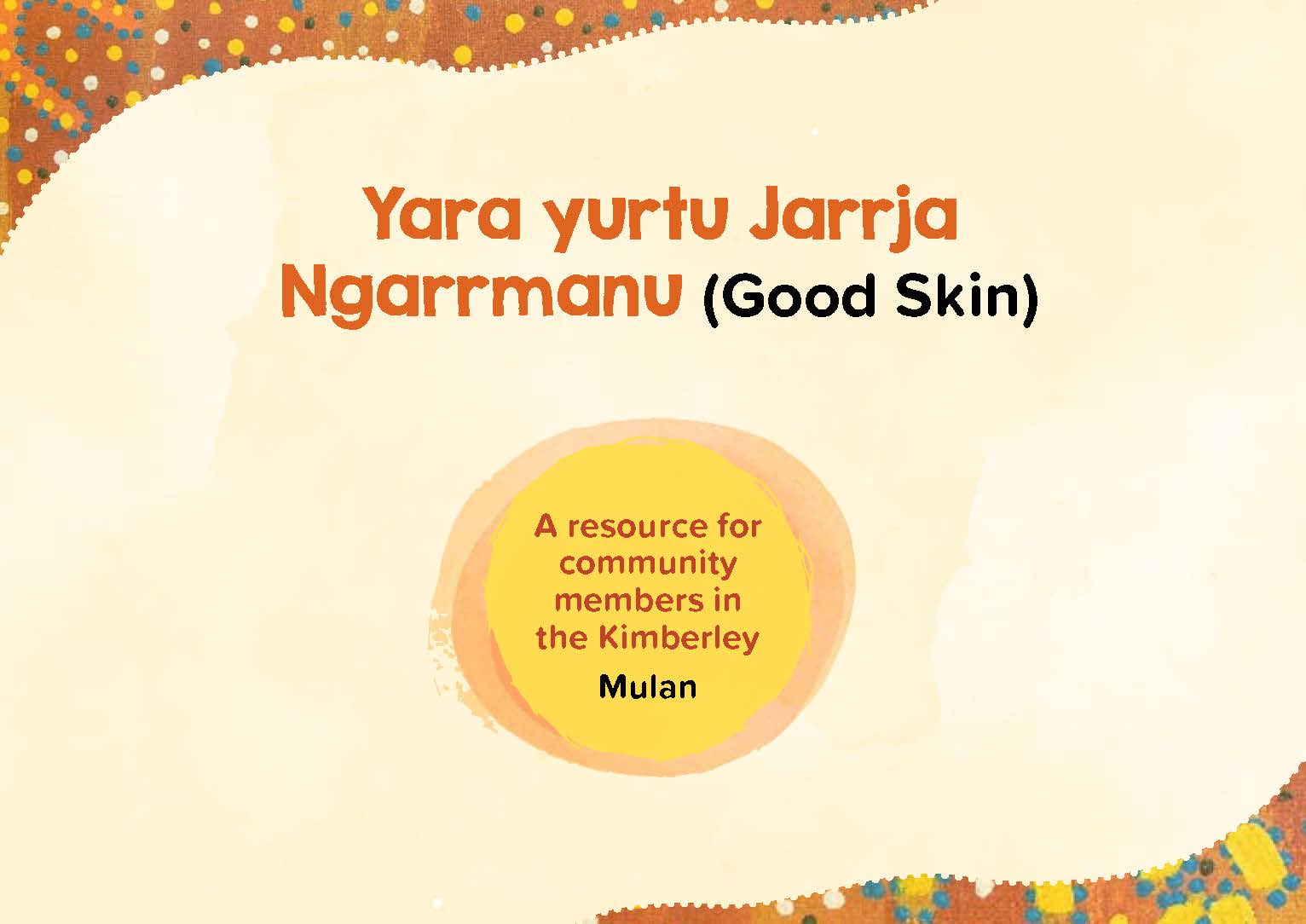
The healthy skin booklets were co-designed and developed following yarns with Elders and community members who requested local language and community context to be included in health promotion resources. Each booklets provides clear and concise key facts, including pictures, for an understanding of scabies, skin sores using local language. It explains what scabies and skin infections look like and how to treat them. Each booklet has the local language and context of the community.
The Gija story book includes traditional bush medicines knowledge and how these medicines can keep skin healthy.
We anticipate these booklets will help families to strengthen their knowledge of skin infections and assist clinicians when discussing and providing treatment.
What did we do?
3,084
skin checks across 8 schools
1,036
skin and throat swabs collected
915
children consented in 9 communities
238
school staff received skin infection training
180
clinic staff received skin infection training
126
children participated in healthy skin workshops at school
125
interviews and yarns
121
community members received skin infection training
>85
community members contributed to healthy skin resources
7
community-driven health promotion resources produced
Partners

Publications
Results and evaluation
- Thomas et al. Trimodal skin health programme for childhood impetigo control in remote Western Australia (SToP): a cluster randomised, stepped-wedge trial. Lancet Child Adolesc Health, 2024.
- Thomas et al. Multi-methods process evaluation of the SToP Trial, a cluster randomised, stepped wedge trial to support healthy skin in remote Western Australia. eClinicalMedicine, 2024.
Background & Situation Analyses
- McRae T et al. Starting the SToP trial: Lessons from a collaborative recruitment approach. PLoS One.
- McLoughlin F et al. Skin health situational analysis to inform skin disease control programs for the Kimberley. Med J Aust, 2022.
- Thomas et al. Skin health in northern Australia. Microbiology Australia, 2022.
- Enkel et al. The inequitable burden of infectious diseases among remote-living Aboriginal and Torres Strait Islander Australians: a product of history. J Aus Indigenous HealthInfoNet, 2024.
Health Promotion and community engagement
- McRae T et al. HipHop2SToP: Empowering Indigenous youth to address Healthy Skin and Healthy Living Practices. Front Public Health, 2023.
- McRae T et al. Culturally supported health promotion to See, Treat, Prevent (SToP) skin infections in Aboriginal children living in the Kimberley region of Western Australia: a qualitative analysis. Lancet Reg Health, West Pac 2023.
- McRae T et al. 'Oombarl Oombarl Joorrinygor – Slowly Slowly Moving Forward: Reflections from a Cross-Cultural Team Working Together on the See, Treat, Prevent (SToP) Trial in the Kimberley Region of Western Australia. Health Promot J Aust, 2025.
- McRae T et al. Centralising Local Aboriginal Language and Culture in Healthy Skin Books on the See Treat Prevent (SToP) Trial in the Kimberley Region of Western Australia: A Process and Impact Inquiry. J Aus Indigenous HealthInfoNet, 2025.
- Dalton R et al. Yarning with a remote Aboriginal community about the next steps for achieving healthy skin. Aust N Z J Public Health, 2025.
Environmental Health
Trial protocol
Statistical analysis plan